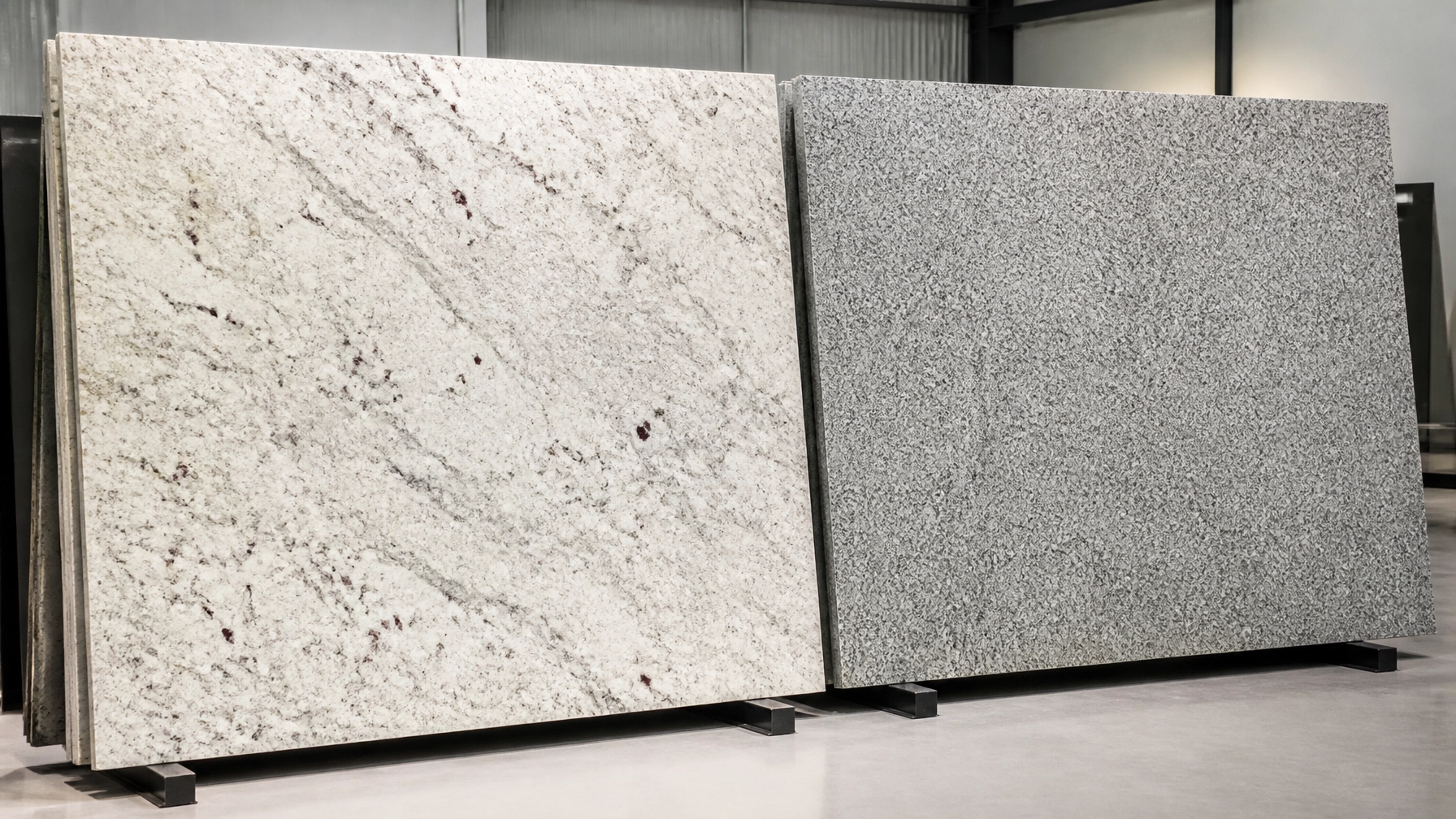
When it comes to sourcing natural stone from India, few materials are as iconic, or as tricky, as Kashmir White Granite and Sadarahalli Granite. One is the “Diva” of the industry, prized for its ethereal white beauty but notorious for its sensitivity. The other is the “Workhorse,” celebrated for its uniform, grey-flecked reliability in massive commercial projects.
As leading Indian Granite suppliers, we at Stone Harbor Exports have seen it all. We’ve seen importers lose thousands on stained shipments and distributors struggle with batches that don’t match.
If you’re importing Granite slabs for a high-end residential project or a sprawling commercial complex, you cannot afford these common sourcing errors. Here are the 7 biggest mistakes you’re likely making, and how we ensure they never happen.
1. Ignoring the “Oil Mark” Risk in Kashmir White
Kashmir White is arguably the most beautiful white granite in the world. It features a snowy background with delicate grey waves and tiny burgundy garnets. However, it is also one of the most porous stones on the market.
The Mistake: Importers often buy Kashmir White based on a small sample without realizing that different quarries produce different density levels. If you source from a “soft” quarry, the stone can absorb oil and moisture like a sponge. Once oil penetrates the surface, it leaves permanent dark rings known as “oil marks.”
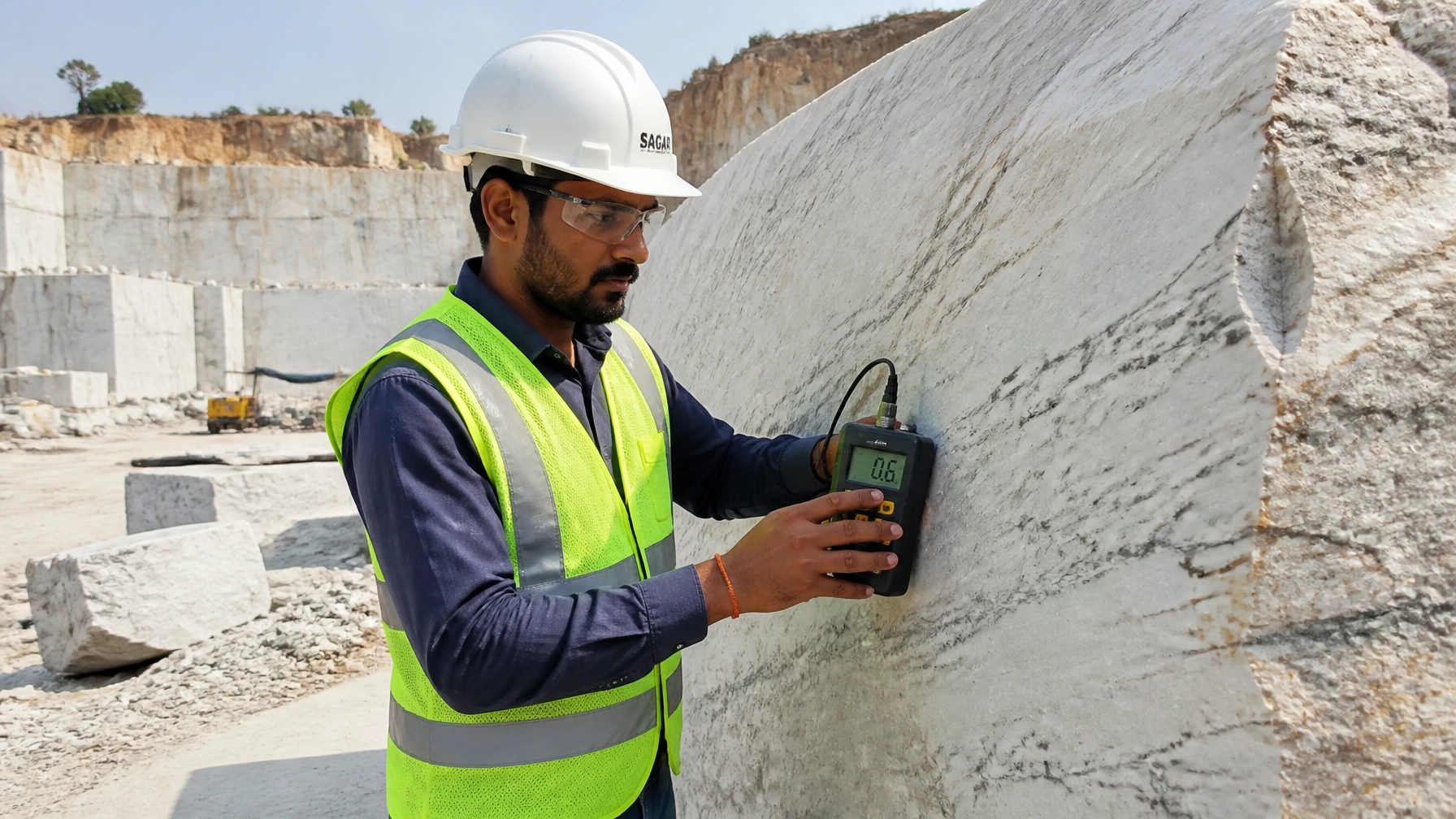
The Fix: Always verify the water absorption rate. High-quality Kashmir White should have a density that resists rapid absorption. At Stone Harbor, we perform on-site moisture testing before any slab leaves the facility. We also recommend pre-sealing with high-grade penetrating sealers specifically designed for light-colored stones.

2. Underestimating the Consistency of Sadarahalli Granite
While Kashmir White is about drama, Sadarahalli Granite (often spelled Sadarahalli Granite) is all about the “salt and pepper” look. It’s a stunning Granite grey colour that is incredibly uniform, making it the go-to for airports, malls, and large flooring projects.
The Mistake: Thinking all grey granite is the same. Because Sadarahalli is considered a more affordable “project stone,” some suppliers get sloppy with grading. They might mix slabs with “black spots” (biotite clusters) or “white patches” into a single batch, ruining the monolithic look required for large floors.
The Fix: Strict batch segregation. When we source Sadarahalli for large-scale projects, we ensure every slab comes from the same quarry level to maintain that perfect, consistent grey grain.
3. Poor Quarry Selection (The “Location” Trap)
Not all quarries in the same region are created equal. For kashmir white granite, the color and porosity can change every 50 meters of depth.
The Mistake: Chasing the lowest price without asking which quarry the stone came from. Lower-priced slabs often come from the upper layers of a quarry, where the stone is more weathered, more porous, and more prone to “yellowing” over time.
The Fix: We maintain direct relationships with premium quarries in South India. We don’t just buy what’s available; we select the blocks from the deeper, more compact layers of the earth to ensure structural integrity and color purity.
4. Failing to Check for Color Inconsistency Across Batches
Natural stone is, well, natural. But there is a difference between “natural variation” and “mismatched inventory.”
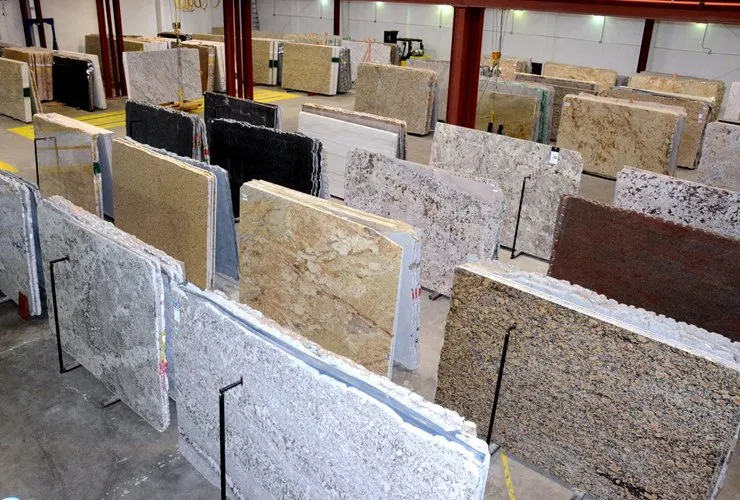
The Mistake: Ordering slabs in multiple shipments and expecting them to match. If you are halfway through a kitchen countertop project and need one more slab, finding a match for a previous batch of Kashmir White is nearly impossible unless the supplier has reserved the sequence for you.
The Fix: For every project, we provide “Book-Matched” or “Sequential” slabs. If you’re debating between light and dark options for your inventory, you might find our comparison of Absolute Black vs. Black Pearl Granite helpful, as dark stones often hide these inconsistencies better than white or grey varieties.
5. Ignoring Moisture and Absorption Rates
This is the silent killer of granite exports. India’s climate is humid, and stone is often processed using water-cooled saws.
The Mistake: Crating “wet” slabs. If granite slabs are packed into wooden crates while they still contain internal moisture, they can develop “bloom” or efflorescence during the 30-40 days they spend in a shipping container. For light stones like Sadarahalli, this can lead to permanent dark damp spots.
The Fix: Stone Harbor Exports ensures a mandatory drying period after polishing. We use industrial blowers and allow the stone to reach an equilibrium moisture content before it ever touches a piece of packing foam.

6. Cheap Crating and Poor Shipping Practices
A slab is only as good as the crate it travels in.
The Mistake: Using non-treated wood or “economic” crating. International shipping involves significant vibration, humidity shifts, and rough handling at ports. We’ve seen entire containers of Granite slabs arrive shattered because the supplier saved $50 on timber.
The Fix: We use ISPM-15 certified, heavy-duty wooden crates with reinforced steel strapping. Every crate is lined with plastic to prevent sea-salt air from reacting with the stone’s minerals. We treat your cargo like the investment it is.
7. Lack of Third-Party or On-Site Inspection
Many importers buy stone “blind,” relying on photos that have been edited or taken in flattering lighting.
The Mistake: Relying on the quarry owner’s word that the quality is “Premium.” In the world of Indian stone export, “Premium” is a subjective term.
The Fix: This is the Stone Harbor Advantage. We act as your eyes on the ground. Our team visits the processing units personally. We check for:
- Micro-cracks (using water tests).
- Correct thickness (ensuring 20mm really means 20mm, not 18mm).
- Gloss levels (using a gloss meter to ensure a mirror-like finish).
Conclusion: Sourcing Smarter with Stone Harbor
Importing Kashmir White Granite and Sadarahalli Granite shouldn’t be a gamble. While these stones offer incredible value and aesthetic appeal, they require a level of technical oversight that most middle-men simply don’t provide.
By focusing on quarry-level selection, moisture control, and rigorous inspection, Stone Harbor Exports eliminates the risks of staining, breakage, and inconsistency. Whether you need the sophisticated “salt and pepper” look of Sadarahalli for a commercial plaza or the elegant white of Kashmir for a luxury residential build, we ensure your stone arrives exactly as promised.
Ready to source premium Indian granite without the headaches? Contact our export team today for a quote on our current inventory of blocks and slabs.