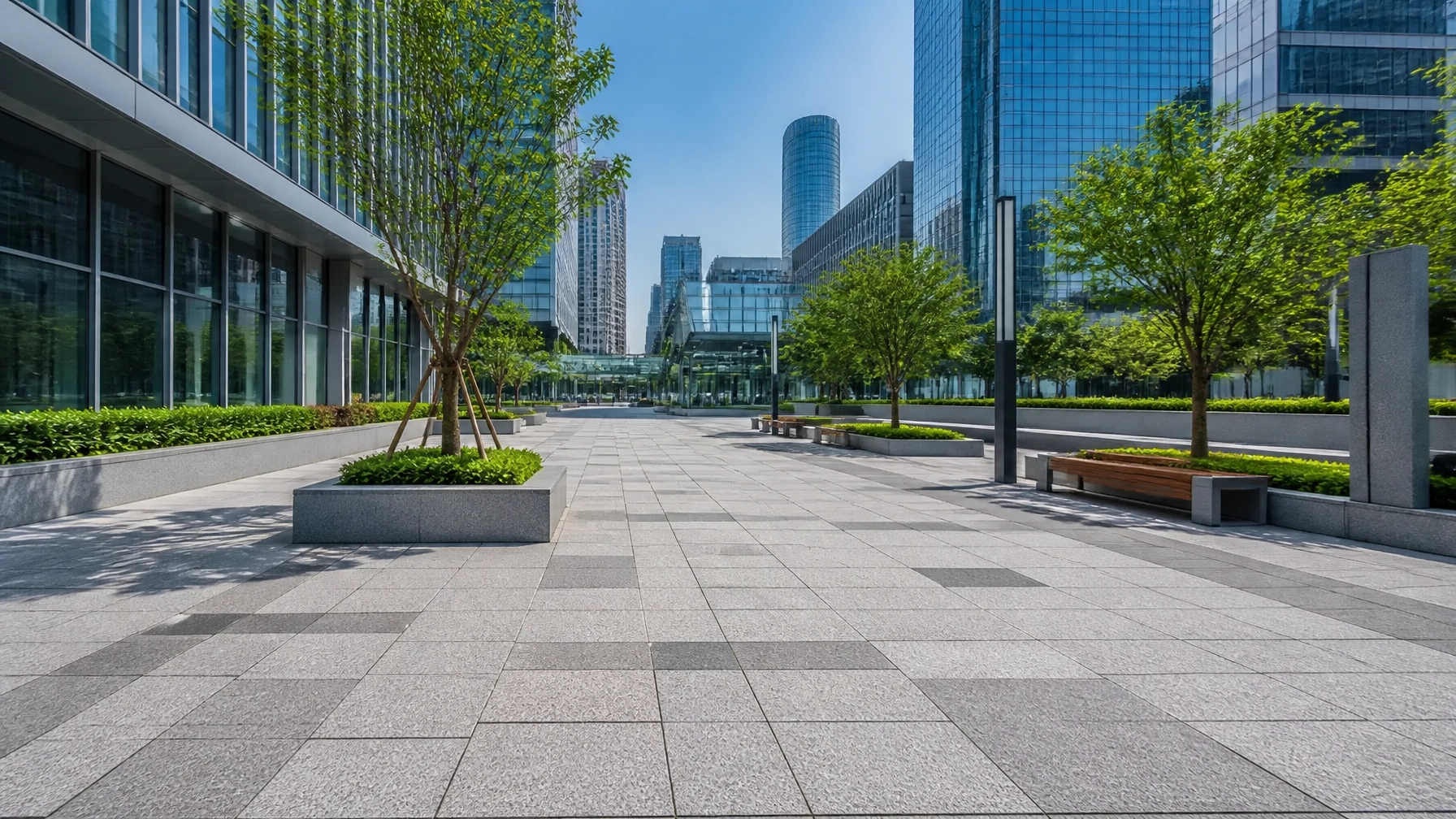
As our global population continues to cluster in metropolitan hubs, the design of our cities is undergoing a radical transformation. We are no longer just building for density; we are building for resilience, health, and sustainability. In the world of high-traffic urban infrastructure: think public plazas, metro stations, and airport terminals: the choice of paving material is no longer just an aesthetic decision. It is a critical component of a project’s environmental footprint and its ability to achieve prestigious green building certifications like LEED (Leadership in Energy and Environmental Design).
At Stone Harbor Exports, we have seen a significant shift in global demand toward Granite. Specifically, grey granite slabs have become the gold standard for architects and urban planners dedicated to creating "Sustainable Cities." But why is this natural stone outperforming synthetic alternatives in the green building arena?
The answer lies in the intersection of ancient durability and modern environmental science.
The Longevity Factor: Why Natural Stone Outlasts the Rest
Sustainability, at its core, is about longevity. A product that needs to be replaced every decade is inherently less sustainable than one that lasts a century. When we compare Granite to synthetic pavers or asphalt, the life cycle assessment (LCA) isn't even a contest.
Synthetic materials often rely on petroleum-based binders and chemical dyes that degrade under UV exposure and heavy foot traffic. In contrast, natural Granite is an igneous rock formed under extreme heat and pressure over millions of years. It doesn't "wear out"; it weathers gracefully.
For a LEED-certified project, using a material that minimizes the need for future extraction, processing, and transportation for repairs is a massive win. When you specify a stone like Steel Grey Granite – Stone Harbor, you are choosing a material with a 50-to-100-year service life. This long-term performance directly supports the Materials & Resources (MR) credits in the LEED v4.1 framework, which rewards building life-cycle impact reduction.

Earning LEED Credits with Grey Granite Slabs
The LEED rating system is the most widely used green building rating system in the world. Achieving certification requires a holistic approach to site development and material selection. Grey granite contributes to several key credit categories:
1. Materials & Resources (MR): Transparency and Optimization
LEED prioritizes materials that provide Environmental Product Declarations (EPDs) and Sourcing of Raw Materials reports. As a dedicated partner to global developers, Stone Harbor Exports ensures that our sourcing processes in Indian quarries: whether for Narlai Grey Granite – Stone Harbor or Maliwada Granite – Stone Harbor: meet the high standards of transparency required for modern certifications.
Furthermore, Granite is a "single-ingredient" material. Unlike composite pavers that may contain Volatile Organic Compounds (VOCs) or undisclosed chemical binders, natural stone is inert and non-emitting. This contributes to Indoor Environmental Quality (IEQ) credits when used in semi-enclosed plazas or transit hubs.
2. Sustainable Sites (SS): Rainwater Management
Urban paving often creates "impervious cover," leading to runoff issues. However, many LEED projects utilize granite setts or slabs in permeable paving systems. By using open-joint designs filled with aggregate, planners can allow rainwater to infiltrate the ground, reducing the burden on municipal storm systems and earning credits for Rainwater Management.
Mitigating the Urban Heat Island Effect
One of the most pressing challenges in modern urbanism is the "Heat Island Effect." Dark surfaces like asphalt absorb solar radiation and re-emit it as heat, raising the ambient temperature of cities by several degrees. This leads to increased energy consumption for cooling and poses health risks to residents.
LEED’s Heat Island Reduction credit requires paving materials to have a high Solar Reflectance Index (SRI). While a dark stone like Absolute Black Granite – Stone Harbor is stunning for interiors, urban paving projects often pivot toward light-to-medium grey tones.

Stones like Steel Grey Granite – Stone Harbor or the even lighter New Kashmir White Granite – Stone Harbor have significantly higher SRI values than asphalt. A flamed or bush-hammered light grey granite can reflect a substantial portion of solar energy, keeping public squares cooler and more comfortable. This "cool paving" strategy is a cornerstone of sustainable urban design in climates ranging from the Middle East to North America.
Safety and Finishes: The Public Square Requirement
Sustainability isn't just about the planet; it’s about the people. Public paving must be safe. A polished finish, while beautiful on a countertop, is a hazard in a rainy metro station. To meet the rigorous safety standards of international infrastructure, grey granite slabs are typically specified with high-grip finishes:
- Flamed Finish: Created by exposing the stone to a high-temperature flame, which causes the surface crystals to pop. This results in a rough, non-slip texture that is perfect for outdoor walkways.
- Bush-Hammered Finish: A mechanical process that creates a uniformly pitted surface. It offers maximum slip resistance and is often used in areas with high inclines or heavy moisture.
For a project like a high-traffic airport terminal, Steel Grey Granite – Stone Harbor with a flamed finish provides the perfect balance of aesthetic uniformity and pedestrian safety.

Real-World Examples: From Airports to Plazas
The versatility of grey granite is best seen in the world's most ambitious infrastructure projects.
Global Transit Hubs
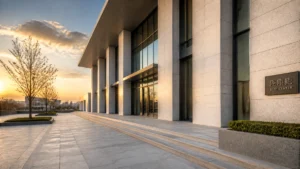
Modern airports and metro stations favor Steel Grey Granite – Stone Harbor because of its "color uniformity." When paving thousands of square meters, designers need to know that the slab installed near Gate A will match the one at Gate Z. This consistency, combined with its resistance to de-icing salts and heavy luggage trolleys, makes it the go-to for transportation hubs.
The Modern Public Plaza
Architects working on LEED-certified city centers often opt for Rue Classic Granite – Stone Harbor. Its neutral, warm-grey palette creates an inviting, "human" feel while maintaining the ruggedness needed for public gatherings, farmers' markets, and festivals.

Conclusion: Partnering for a Greener Future
As we look toward the future of urban living, the materials we choose today will define the resilience of our cities tomorrow. Grey granite slabs are more than just a durable paving option; they are a strategic tool for achieving environmental goals, reducing urban heat, and ensuring public safety for generations.
At Stone Harbor Exports, we take pride in being a global link between India’s premium quarries and the world’s most visionary architectural projects. Whether you are specifying Steel Grey Granite – Stone Harbor for a new metro line or Narlai Grey Granite – Stone Harbor for a LEED-certified corporate campus, we provide the quality, consistency, and logistics expertise to bring your sustainable vision to life.
Sustainable cities aren't built by accident: they are built by choice. Choose the stone that stands the test of time.