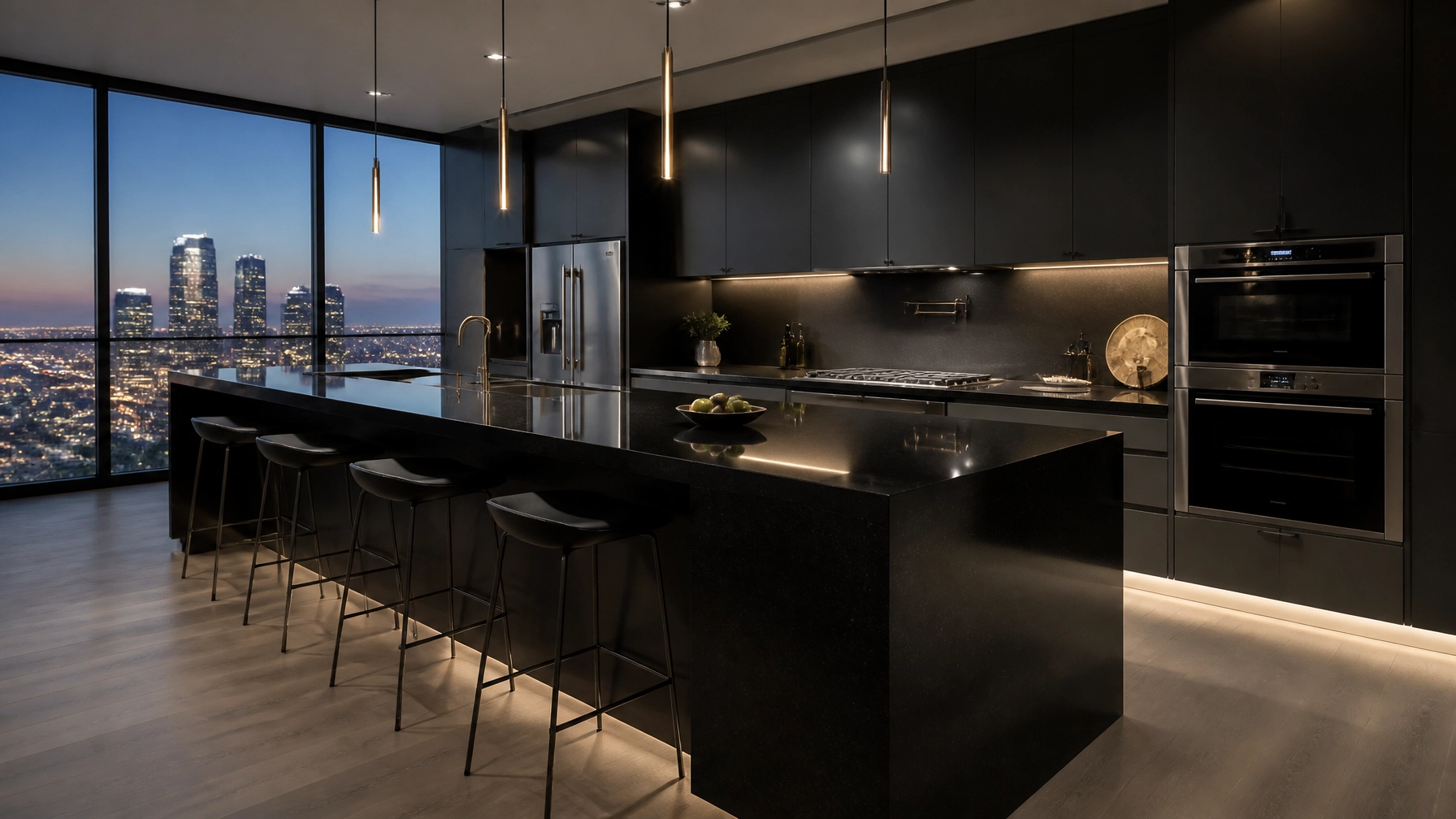
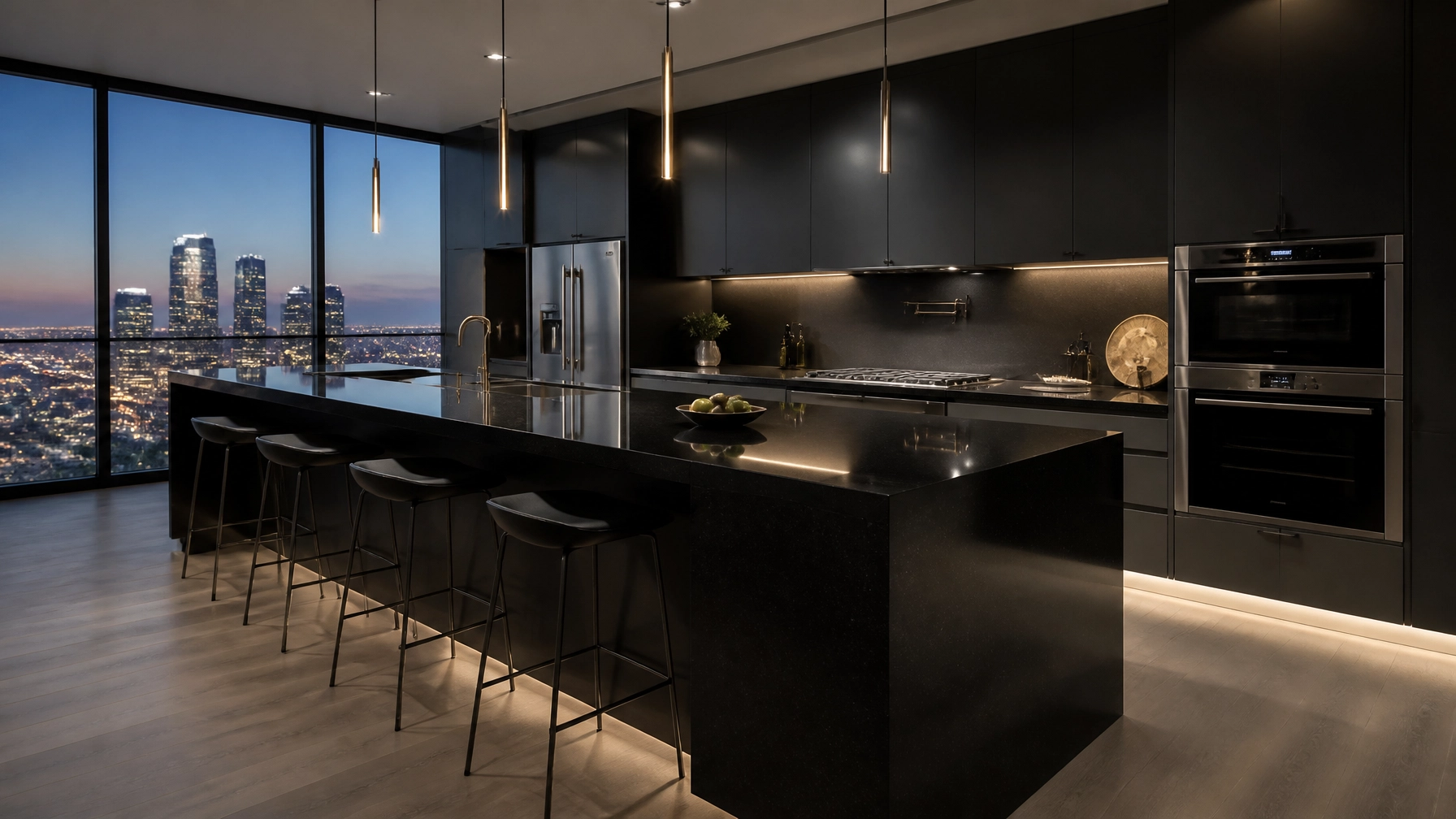
In the world of high-end architecture and interior design, few materials carry the same weight of prestige and timelessness as a perfectly polished black granite stone. It is the "Little Black Dress" of the stone industry: versatile, sophisticated, and always in style. From the sleek countertops of Manhattan penthouses to the grand entryways of commercial skyscrapers in Dubai, Jet Black Granite has become the gold standard for architects who demand both durability and a bold aesthetic.
However, behind that deep, inky surface lies a world of industry secrets. Not every black slab is created equal, and for the untrained eye, the differences between a premium natural stone and a subpar, treated product can be nearly impossible to spot: until it’s too late.
At Stone Harbor Exports, we believe in transparency. As global partners in the stone trade, we’ve seen it all. Today, we’re pulling back the curtain on the secrets of black granite to ensure your next project stands the test of time.
The "Inky" Illusion: The Secret of Dyed Stones
One of the best-kept secrets in the wholesale stone market is the practice of "doctoring" or dyeing granite. Truly deep, uniform black granite is rare and highly sought after. Because of this high demand, some lower-tier suppliers take lighter, greyish granite and treat it with oils, dyes, or epoxy resins to darken the surface.
When you first see these slabs in a warehouse, they look stunning. They are pitch black, glossy, and seemingly perfect. But the "secret" is that this beauty is only skin-deep. Within months of installation: especially in high-traffic areas or kitchens: the dye begins to react with household cleaners or UV light. The result? A patchy, faded grey surface that looks nothing like the premium stone you paid for.
How to Spot a Fake: The Acetone Test
If you are importing or purchasing large quantities of black granite stone, you cannot rely on a visual inspection alone. Experts use a simple, low-tech secret called the Acetone Test.
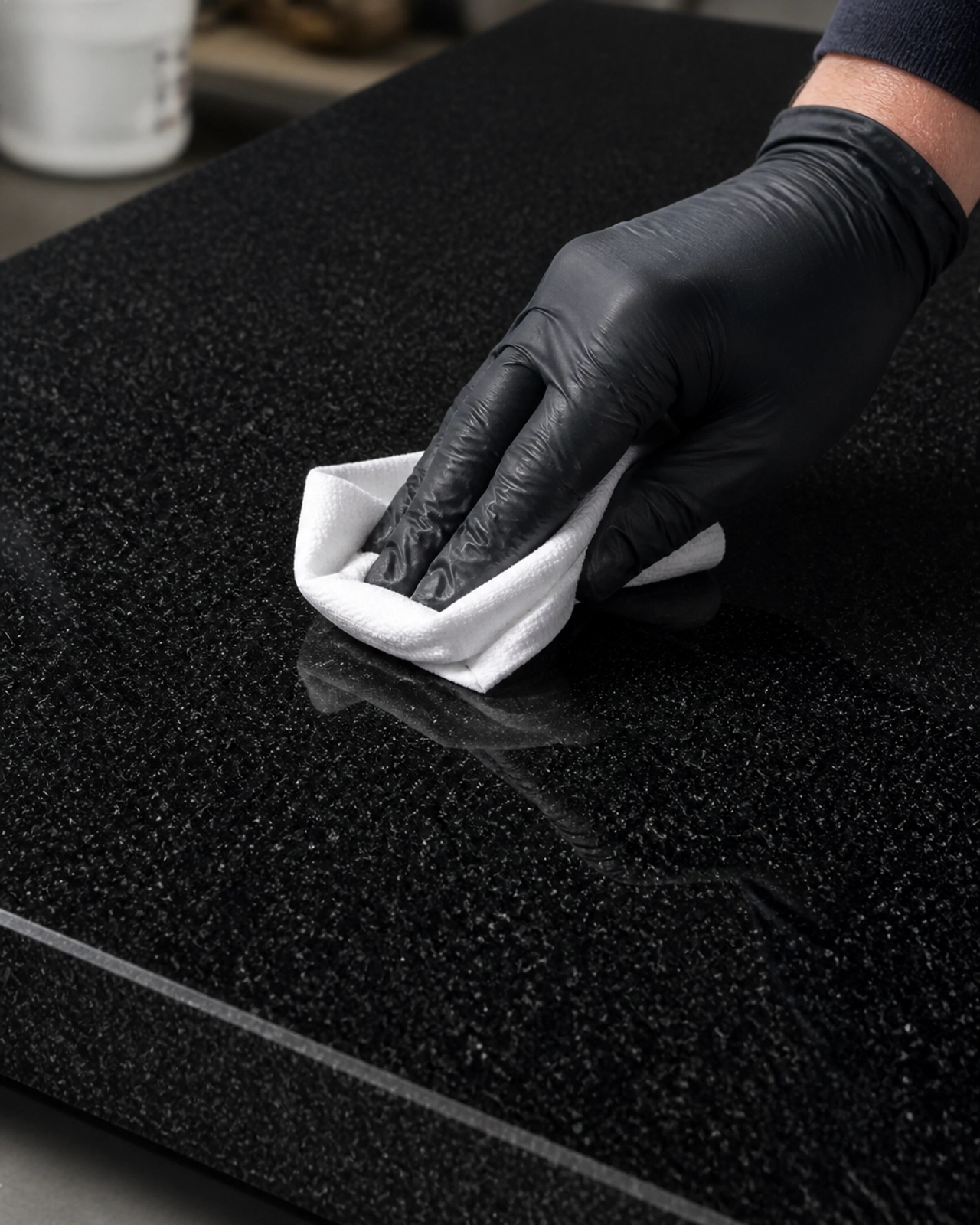
To perform this test, take a clean white cloth and apply a small amount of acetone (fingernail polish remover). Rub the surface of the slab vigorously in a small, inconspicuous area. If the cloth remains white, the stone’s color is natural. If the cloth comes away with black or grey residue, the stone has been dyed. At Stone Harbor Exports, every block we source undergoes rigorous inspection to ensure that the depth of color is a product of nature, not a chemical shortcut.
Understanding the Varieties: Jet, Absolute, and Pearl
To the casual observer, all black granite might look the same. But to the expert, the mineral composition and origin tell a different story. Choosing the right variety is the secret to achieving the specific "vibe" of your project.
1. Jet Black Granite
Jet Black Granite is known for its incredibly fine-grained structure. While it appears solid from a distance, a closer look reveals tiny, subtle crystalline patterns that give the stone its natural "life." It is remarkably hard (6-7 on the Mohs scale), making it virtually scratch-resistant.
2. Absolute Black Granite
Often confused with Jet Black, Absolute Black Granite is the pinnacle of uniformity. Sourced primarily from premium Indian quarries, this stone is famous for having almost no visible grain or variation. It provides a "void-like" blackness that is a favorite for minimalist, modern designs where any distraction from the pure color is unwanted.

3. Black Pearl Granite
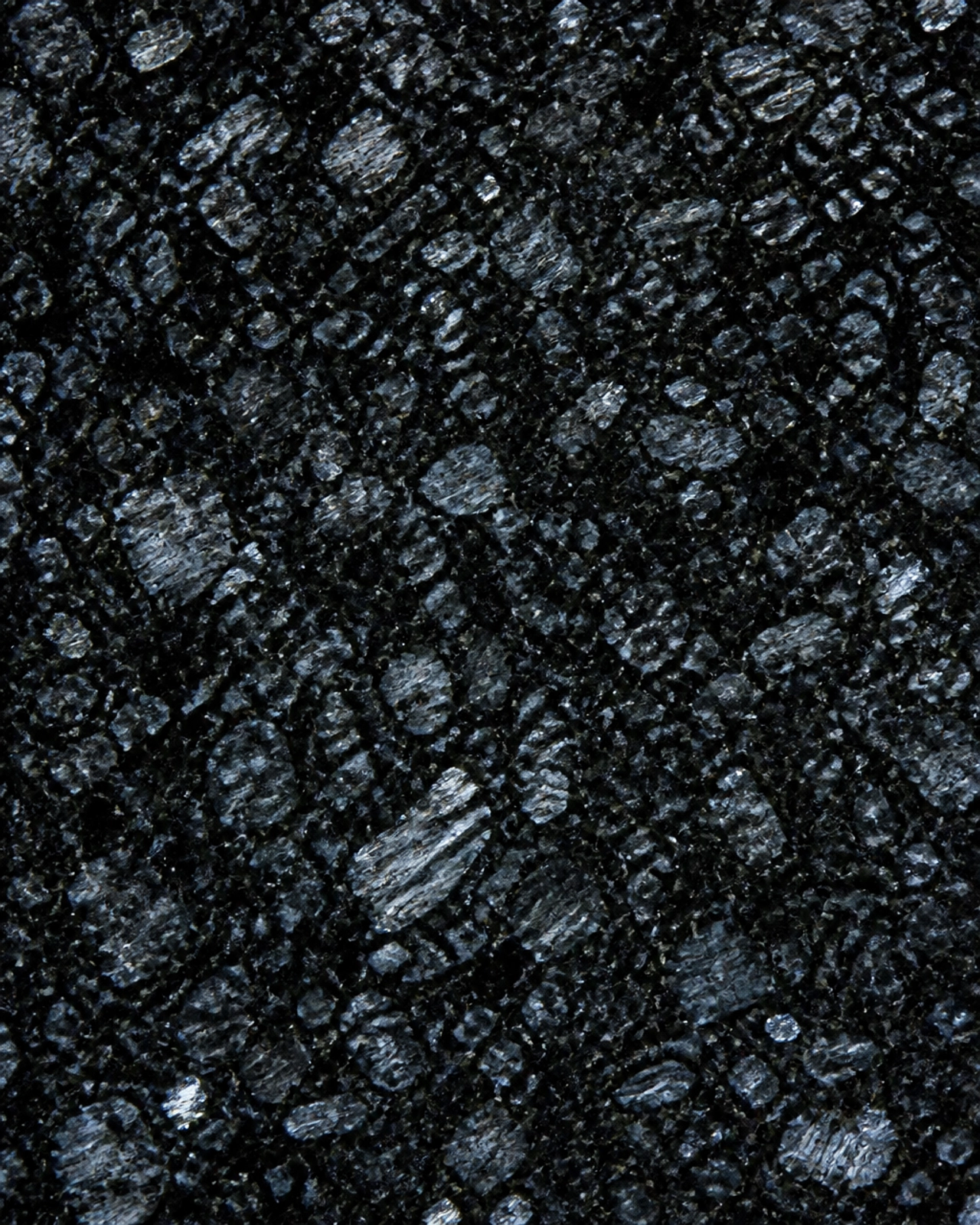
For those who find solid black too sterile, Black Pearl Granite offers a captivating alternative. This stone features a dark base punctuated by metallic-looking silver and blue mineral flecks. These "pearls" catch the light beautifully, providing a textured, dynamic appearance that hides fingerprints and water spots much better than its solid black cousins.
The Truth About Porosity and Maintenance
There is a common misconception that all black granite stone is non-porous. While it is true that darker granites are generally denser and more resistant to staining than lighter varieties like Kashmir White, they are not completely impervious.
The secret to longevity lies in the finish. A polished finish naturally "seals" the surface more effectively by closing the pores of the stone during the grinding process. However, if you opt for a honed (matte) or leathered (textured) finish, the stone’s pores are slightly more exposed. In these cases, a high-quality impregnating sealer is essential.
Experts also know that black granite is sensitive to acidic substances. While it won't "etch" like marble, acidic cleaners can strip away the sealer or the natural oils of the stone over time, leading to a dull appearance. The secret? Stick to pH-neutral cleaners and a soft microfiber cloth to maintain that mirror-like reflection.
Sourcing the Best: Why India Leads the World
When it comes to Jet Black Granite, origin matters. While many countries produce black stone, Indian quarries are world-renowned for producing the most consistent and deepest blacks in the industry.
The geological conditions in Southern India have created deposits of granite that are exceptionally dense and thermally stable. This is why major global projects: from airports to luxury hotels: specifically request Indian-origin black granite.
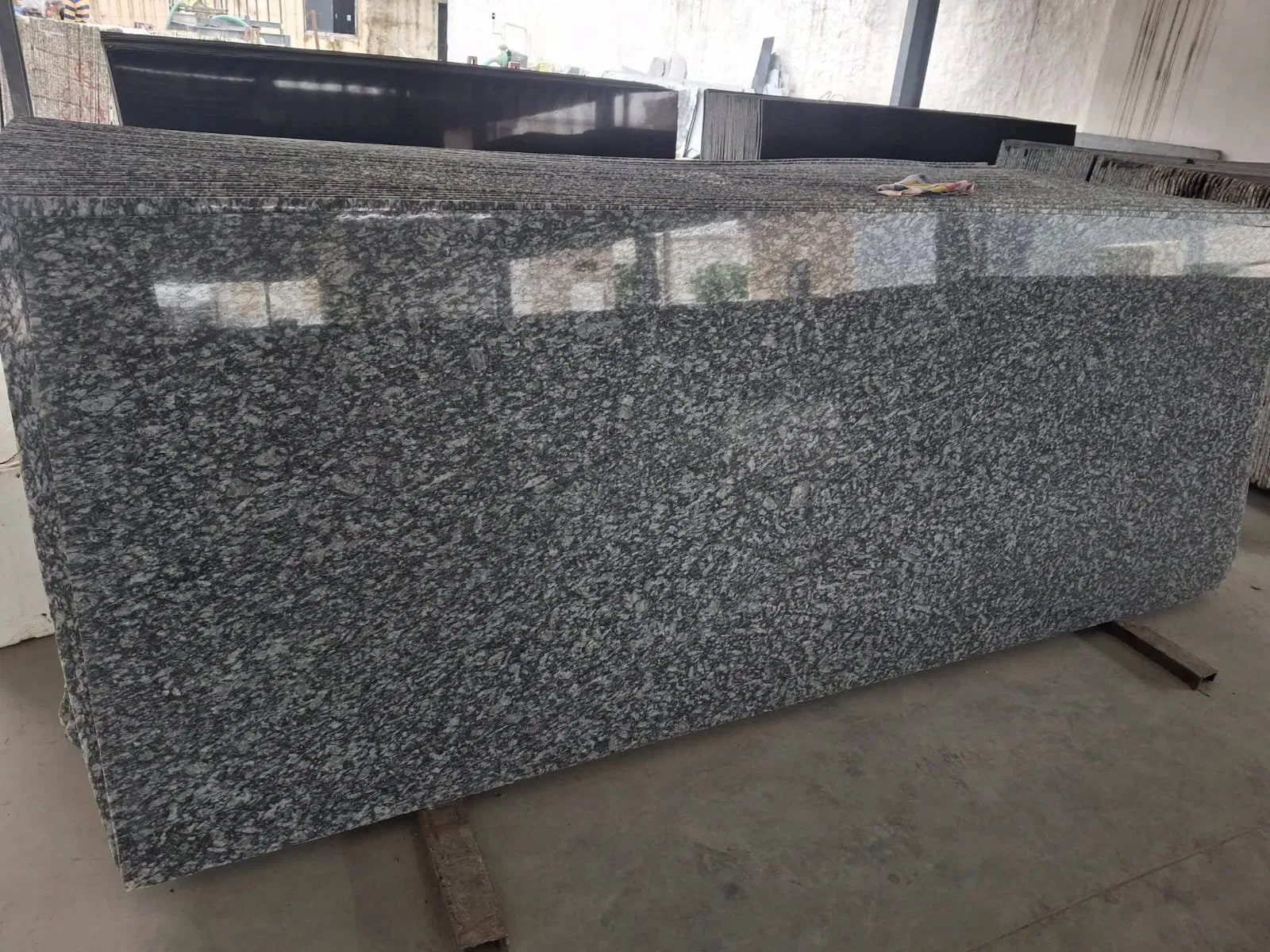
At Stone Harbor Exports, our role goes beyond just shipping stone. We act as your eyes on the ground. Our team visits the quarries, inspects the raw blocks, and oversees the precision-cutting process. We understand that for an importer, a single cracked slab or a batch of off-color stone can ruin a project's timeline and budget.
The Logistics Secret: It’s All in the Crating
You could have the most beautiful black granite stone in the world, but if it arrives at your project site in pieces, it's worthless. The final secret that experts know is that the quality of the stone is only as good as the quality of the shipping.
Natural stone is incredibly heavy yet surprisingly brittle when subjected to the vibrations of ocean freight. We utilize heavy-duty, fumigated wooden crates with internal padding and reinforced bracing. We ensure that every slab is secured to prevent "chattering": the micro-vibrations that cause hairline fractures during transit.
Conclusion
Jet Black Granite is more than just a building material; it is a statement of quality and permanence. By understanding the secrets of dyeing, the nuances between different varieties, and the importance of origin and logistics, you can ensure that your investment remains as stunning decades from now as it is on the day of installation.
Whether you are looking for the absolute uniformity of Absolute Black Granite or the shimmering depth of Black Pearl Granite, Stone Harbor Exports is here to guide you. We don't just export stone; we export confidence.
Ready to source the world’s finest black granite for your next project? Contact us today to discuss your specifications and experience the Stone Harbor difference.