In the world of natural stone, names are often a form of poetry rather than a geography lesson. Take Himalayan Blue Granite, for instance. To the uninitiated, the name suggests high-altitude quarries tucked away in the shadows of Mount Everest. In reality, this stone is born nearly 2,000 miles south, in the sun-drenched plains of Karnataka, India.
This is the "Karnataka Paradox." How did a stone from the tropical South become the undisputed global standard for "Mountain Modern" design in places like Aspen, Chamonix, and the Highlands?
As an industry insider, I’ve seen this stone go from a niche favorite to a bestseller in the USA and Europe. It’s not just about the name: it’s about a unique mineralogical signature that captures the raw, energetic spirit of a mountain range within a single slab of Granite.
The Mineralogy: Why the Swirl Matters
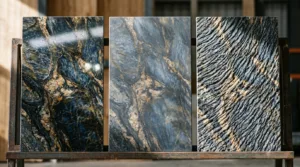
When you look at a slab of Himalayan Blue Granite, you aren't just looking at a rock; you’re looking at a geological event. Technically classified as a migmatite, this stone represents a moment in time where the Earth was partially melting.
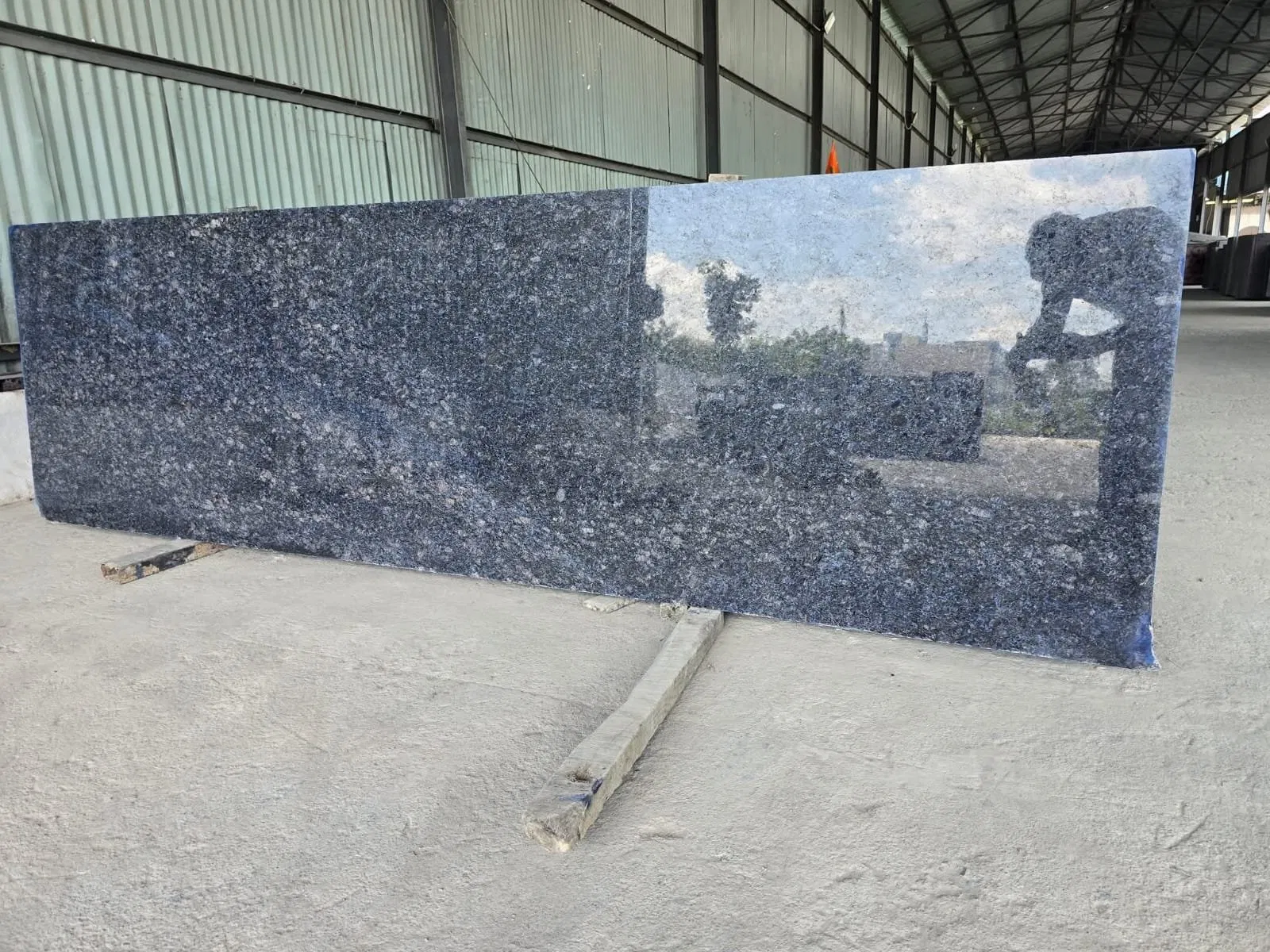
The visual energy comes from two competing forces:
- The Cool Base: A matrix of blue-grey feldspar and quartz that provides a steady, sophisticated backdrop.
- The Warm Interruption: Dramatic, iron-oxide-rich orange and reddish-brown swirling waves that cut through the blue.
This combination is rare. Most blue stones tend to be monochromatic or strictly "cool." Himalayan Blue Granite offers a "warm-cool" balance that allows it to bridge the gap between cold, modern industrialism and warm, rustic traditionalism. No two slabs are identical, meaning every project gets its own unique "thumbprint" of nature’s artistry.
Defining "Mountain Modern"
Over the last decade, the architectural world has moved away from the "heavy log cabin" look toward something called "Mountain Modern." This style emphasizes clean lines, large glass walls, and a palette that mirrors the surrounding landscape.
Designers in the US and Europe love Himalayan Blue Granite for these projects because it mimics the aesthetics of a high-altitude environment: the way sunset light hits a granite cliff face or the movement of storm clouds over a ridge.
While it’s often paired with Absolute Black Granite for contrast, it holds its own as a statement piece. It works brilliantly for "high-altitude aesthetics" even in urban or coastal settings, bringing a sense of rugged permanence to a city penthouse or a beachfront estate.
Technical Excellence: Built for the Extremes
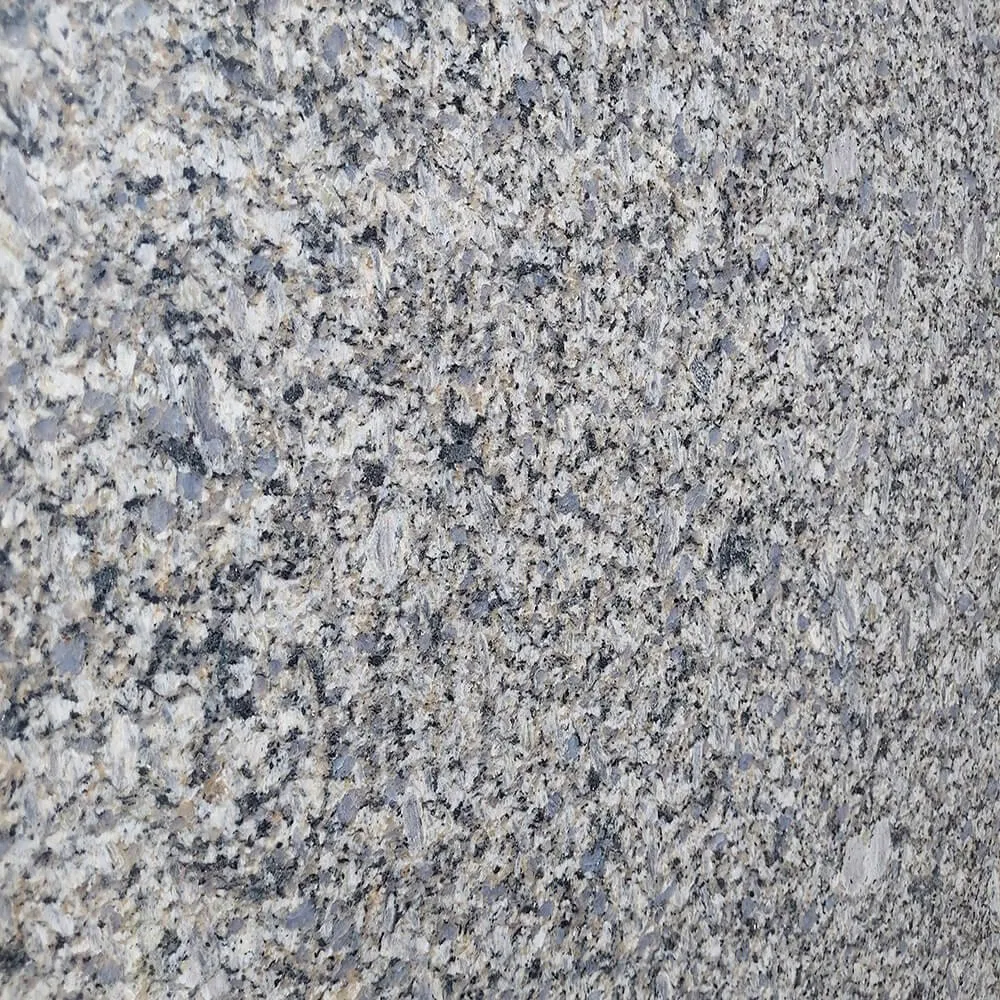
Beyond its "exceptional visual energy," Himalayan Blue Granite is a workhorse. If you are specifying stone for a project in a freezing climate, the technical specs are non-negotiable.
- Hardness: Rated 6-7 on the Mohs scale, it’s significantly harder than Marble or most Sandstone.
- Density: At 2.63-2.75 g/cm³, it is incredibly dense, meaning it has a water absorption rate of less than 0.5%.
- Weather Resistance: This is the clincher. Its low porosity makes it exceptionally resistant to the freeze-thaw cycle. In places like Scandinavia or the American Midwest, where water can seep into stone and crack it during a freeze, Himalayan Blue Granite remains untouched.
Whether you're using it for kitchen countertops or exterior wall cladding, it offers the durability of a skyscraper with the beauty of an oil painting.
The Global Demand: Why it’s a Bestseller
Why do we export so much of this specific stone to the USA, UK, and Europe? It's the versatility.
In a European kitchen, a honed or leathered finish on Himalayan Blue Granite creates a tactile, organic feel that complements minimalist cabinetry. In the American market, the high-gloss polished finish is often the go-to for large islands, where the orange swirls can pop under pendant lighting.
We also see it frequently requested alongside Kashmir White for large-scale developments. While Kashmir White provides a bright, airy feel, Himalayan Blue Granite adds the necessary depth and drama to anchor a room.

Applications: Beyond the Countertop
While many think of Granite strictly for kitchens, the Karnataka paradox has led this stone into some surprising spaces:
- Feature Walls: Because the movement is so directional, book-matching slabs of Himalayan Blue Granite can create a focal point in a hotel lobby that looks like a piece of abstract art.
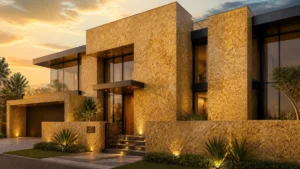
- Exterior Facades: Its resistance to UV rays ensures the blue doesn't fade and the orange doesn't dull, making it a favorite for commercial buildings.
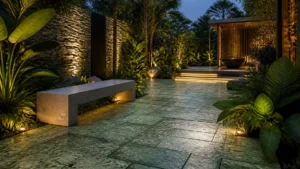
- Landscape Architecture: Flamed finishes are used for slip-resistant pool surrounds that maintain a luxury aesthetic. It’s a tougher, more exotic alternative to standard Quartzite options.
Sourcing with Stone Harbor
At Stone Harbor Exports, we don’t just ship stone; we curate it. Sourcing Himalayan Blue Granite from the Raichur and Koppal districts of Karnataka requires a keen eye for "flow." We look for blocks that have a balanced ratio of blue to orange, ensuring that when the slabs are cut, they deliver the visual impact your project deserves.
If you are looking for a stone that tells a story: one of tropical heat and mountain-like majesty: this is the one. It’s durable enough for a high-traffic airport floor but beautiful enough for a master bathroom vanity.
Conclusion: Embracing the Paradox
The name might be a marketing masterstroke, but the performance of Himalayan Blue Granite is pure science. It offers the world a piece of India’s geological heritage that feels right at home in the most modern, rugged environments on Earth.
Whether you are an architect in London or a developer in Denver, this stone brings a piece of the mountain to you: no matter how far you are from the Himalayas.