Description
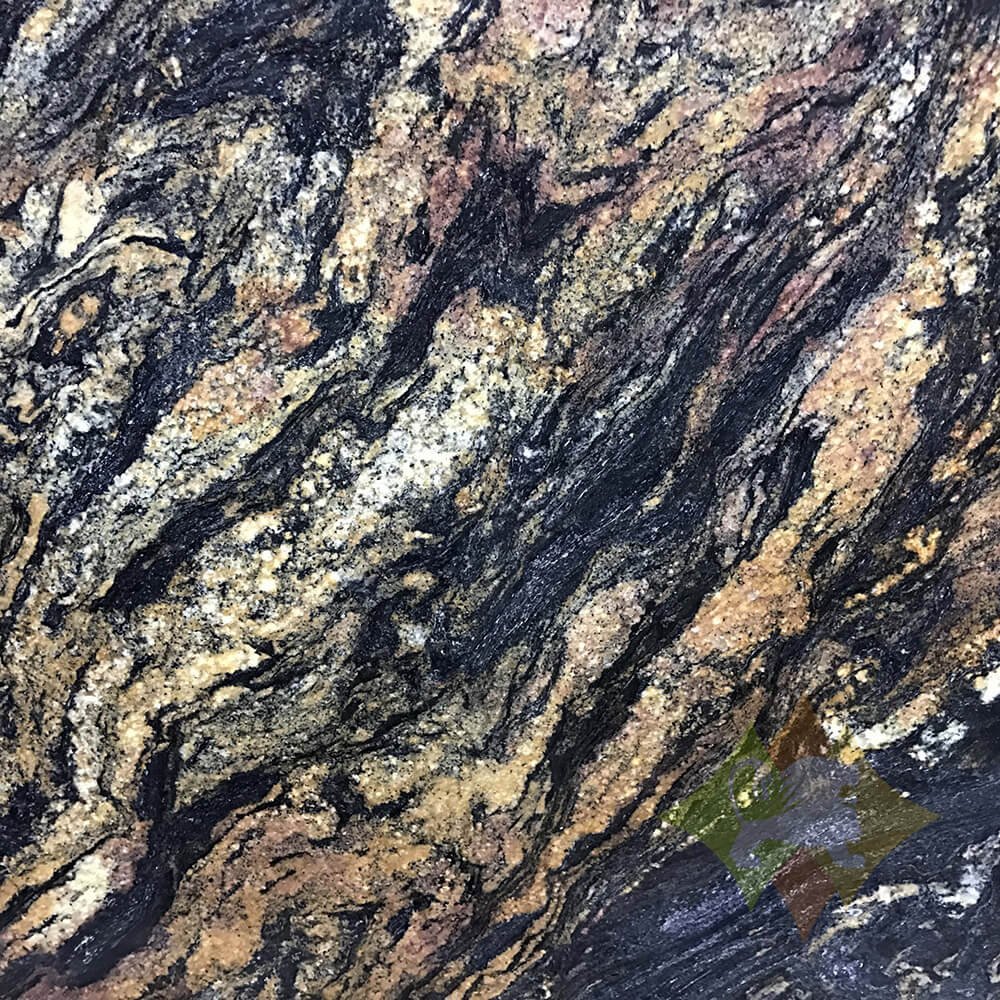
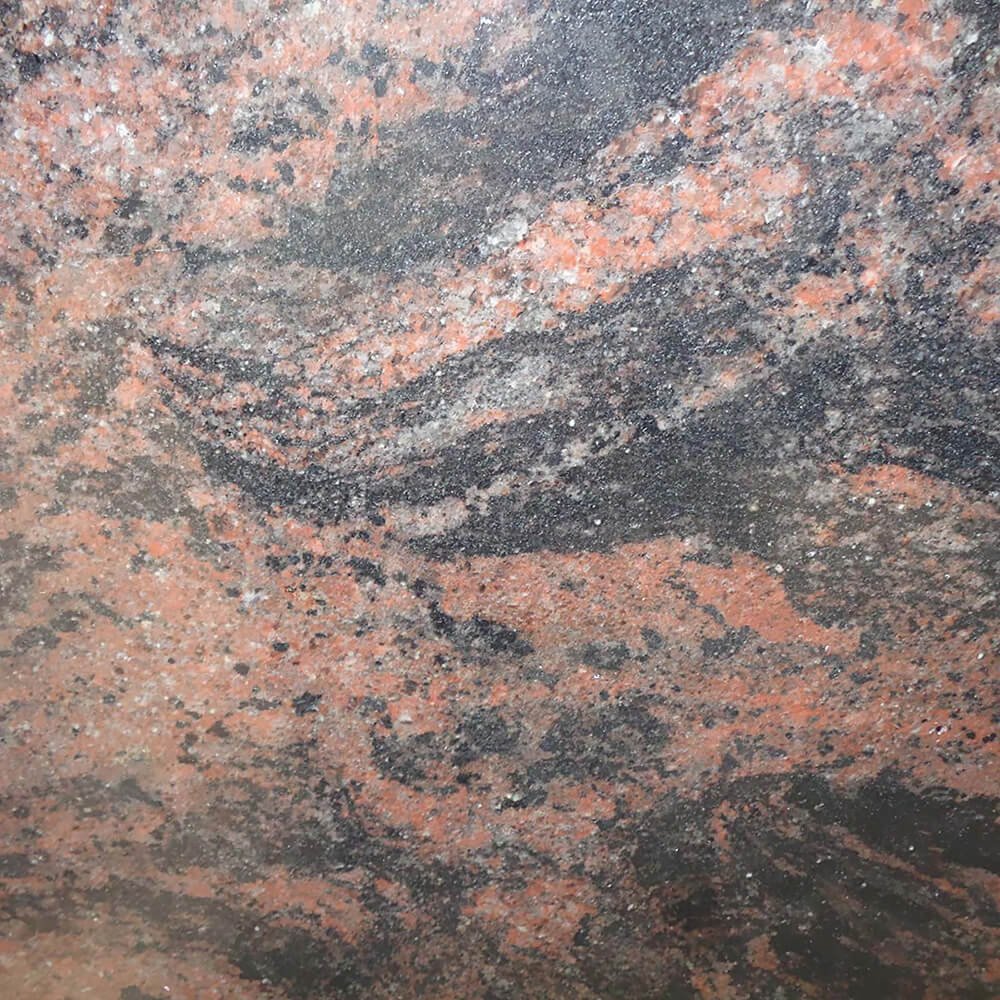
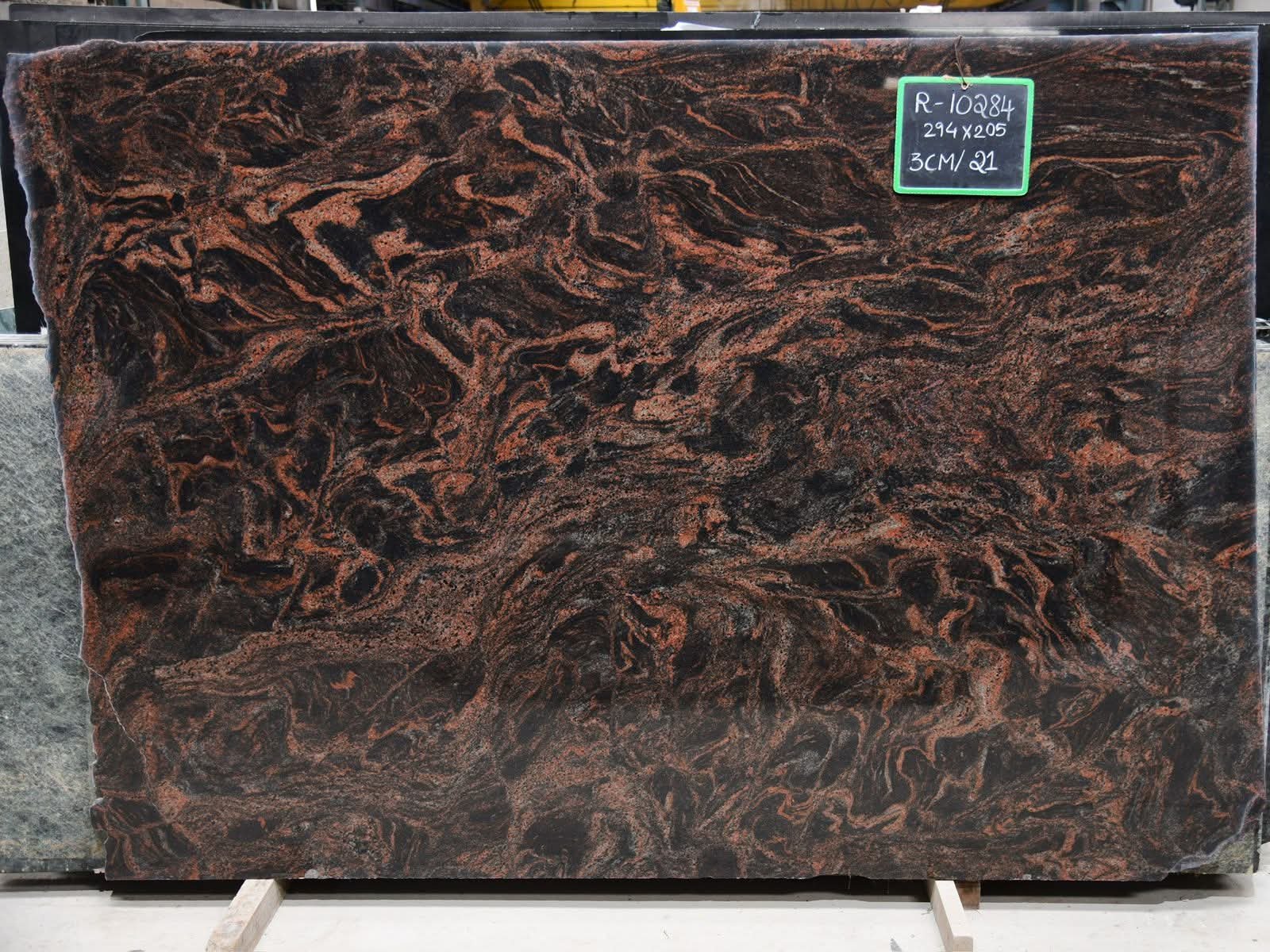
Indian Aurora Granite is one of South India’s most visually dramatic and internationally celebrated stones — a migmatite gneiss whose rich reddish-brown base is swept through with dark, undulating waves and swirls in grey, red, and deep brown that genuinely evoke the dynamic movement of the Aurora Borealis after which it is named. It is a stone of considerable personality: its organic, flowing wave pattern ensures that no two slabs are identical, and its combination of warm red-brown base and contrasting dark mineral currents creates a surface that commands attention in any application.
Origin & What Makes It Unique
Indian Aurora Granite is quarried in South India, primarily in Telangana and Karnataka — states with a long tradition of high-quality granite extraction. Technically classified as a migmatite gneiss of the Precambrian period rather than a true granite in the geological sense, it is nonetheless commercially traded as a granite and performs equivalently for all architectural and design applications. It is also known internationally as Aruba Tropical Granite, Indora Granite, and Indian Aurora Red Granite — names that reflect its various market presentations. The stone earned its primary name from its visual resemblance to the original Finnish Aurora granite, and its surface patterns genuinely evoke the sweeping colour bands of northern lights. It is widely exported to North America, Europe, the Middle East, and Asia Pacific where it is favoured for countertops, flooring, monuments, and high-profile architectural installations.