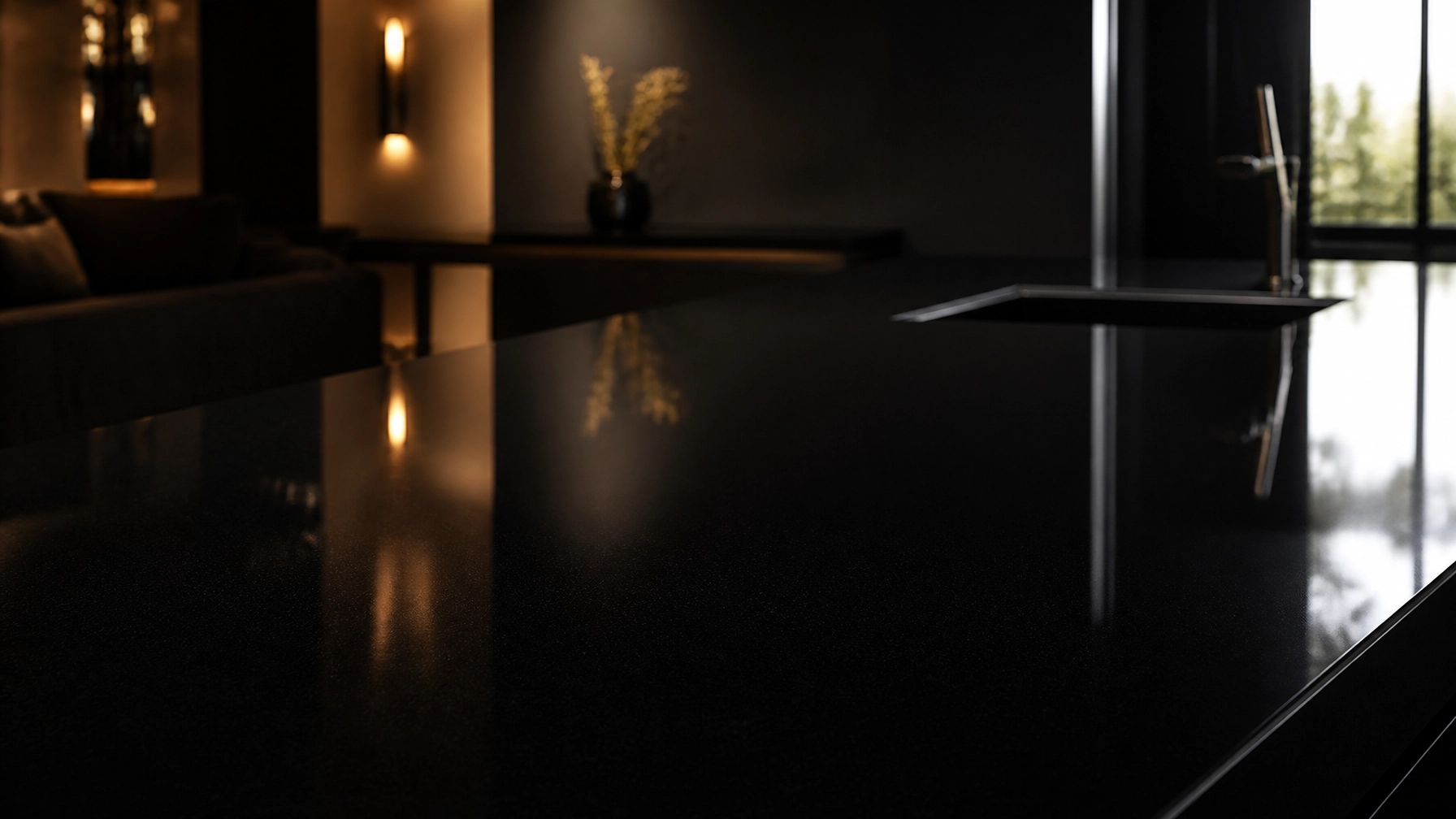
For centuries, black granite has stood as the ultimate symbol of permanence and prestige. In the world of international architecture and monument design, few materials can match the quiet, authoritative power of a perfectly polished black slab. Whether it’s the monolithic depth of a luxury skyscraper’s facade or the somber elegance of a memorial, the choice of black granite stone is rarely just about color: it is about the grade.
However, for international importers and architects, the "black granite" market can be a complex landscape to navigate. Unlike diamonds or gold, there is no single, unified global grading body for natural stone. Instead, quality is determined by a series of geological and aesthetic factors that vary from quarry to quarry. Understanding these nuances is the difference between securing a world-class material and receiving a container of stone that falls short of the project's vision.
At Stone Harbor Exports, we believe that transparency is the bedrock of a successful partnership. In this guide, we’ll break down the technical grading systems of Indian black granite to help you make informed, confident procurement decisions.
The Foundation of Grade: Grain Size and the "Gold Standard"
In the world of stone, texture is everything. When we talk about the "grade" of black granite, the first thing an inspector looks at is the grain size.
The finest grain represents the pinnacle of quality. Absolute Black Granite is the global benchmark for this category. Geologically composed of hornblende and pyroxene with almost zero feldspar or quartz, its mineral grains are often smaller than 0.5 mm.
Why does this matter?
- Mirror-Like Polish: Fine-grained stones can achieve a level of reflectivity that coarser stones simply cannot match. When polished, the surface becomes a liquid-dark mirror.
- Structural Integrity: Finer grains often translate to higher density and lower water absorption, making the stone exceptionally durable against the elements.
- Visual Uniformity: In a large-scale installation, you want the stone to look like a single, continuous plane. Fine-grained stones like Absolute Black Granite provide that "uninterrupted" look that architects crave.

Color Intensity: Deep Jet Black vs. Tonal Variations
Not all blacks are created equal. The market typically separates black granite into categories based on its background depth.
Premium / Supreme Black
This is the darkest tier. A Jet Black Granite of this grade has no visible hue of brown, green, or blue. It is an uncompromising, pure black. This grade is the standard for high-end luxury interiors and high-profile commercial feature walls.
Standard / Medium Black
While still undeniably "black," these stones might have a slightly greyish or charcoal undertone when placed directly next to a premium slab. They are excellent for large-scale flooring projects where a slight natural variation adds character without compromising the overall aesthetic.
Commercial Grade
Often used for external paving or industrial applications, commercial-grade black granite may show more visible grey specks or tonal shifts. While it lacks the "void-like" depth of Jet Black Granite, its durability remains top-tier, making it a cost-effective solution for heavy-duty infrastructure.
The "Gala" Effect and Mineral Flecks: Character vs. Inconsistency
In the trade, "gala" often refers to the distribution of mineral flecks. For some stones, these flecks are the primary selling point; for others, they are considered defects.
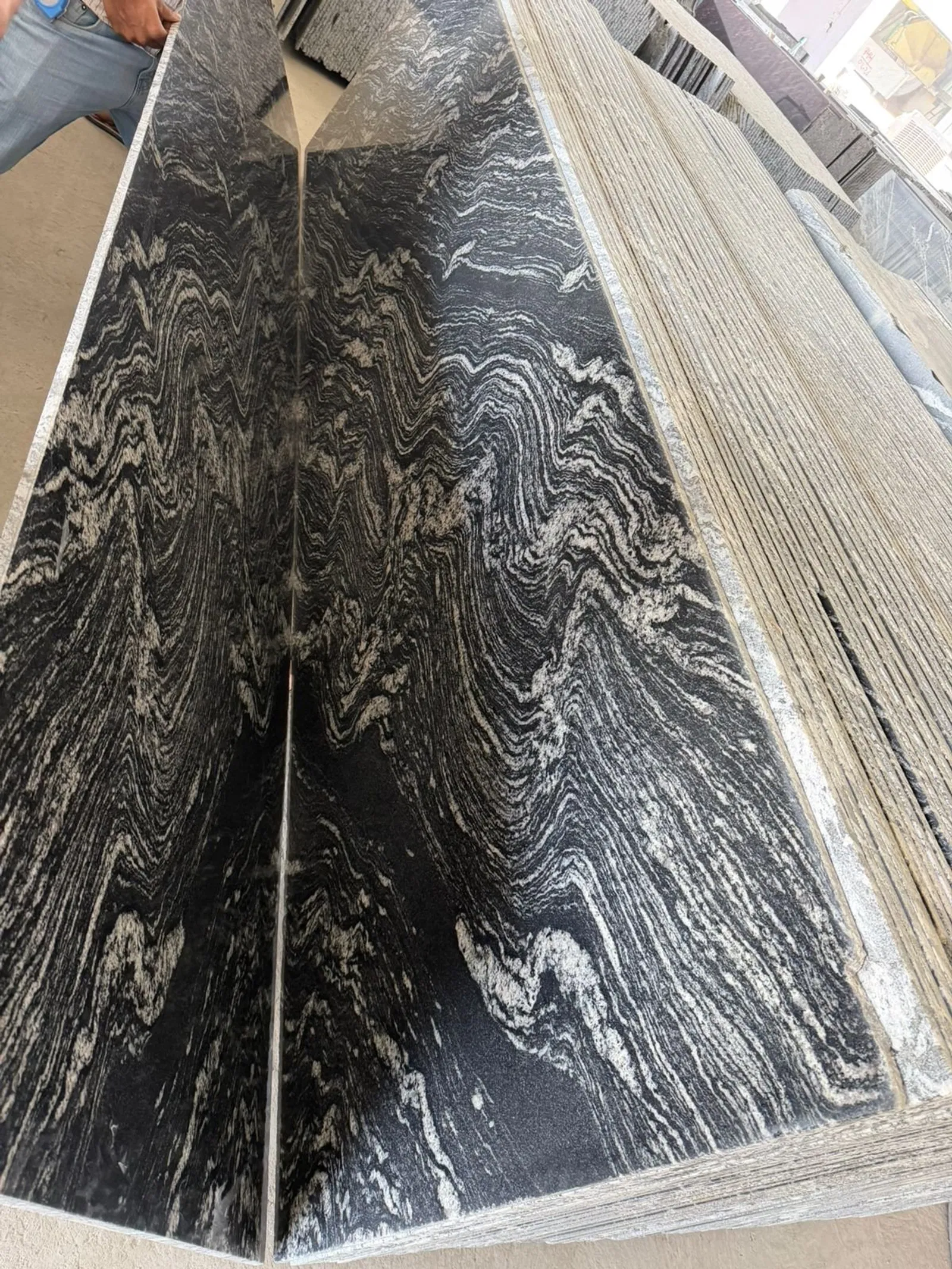
Consider Black Pearl Granite. This stone is famous for its pearlescent depth, created by a subtle scatter of silver and grey mineral formations. In this context, a "premium" grade means the flecks are evenly distributed, creating a woven, metallic texture.
However, in a "pure black" specification, the appearance of silver flecks or "gala" spots can be seen as a downgrade. International buyers must be specific: are you looking for the absolute void of a pure black, or the celestial dance of a Black Pearl Granite?

Spotting the Imperfections: Surface Defects to Watch For
When inspecting Granite slabs for export, our team at Stone Harbor Exports looks for three primary visual "deal-breakers":
- White Lines and Veins: These are quartz or feldspar intrusions that can cut across a black slab like a lightning bolt. In premium grades, these are strictly forbidden.
- "Gala" Clusters: An uneven concentration of minerals in one corner of a slab can ruin the symmetry of an installation. Consistency is the hallmark of a high-grade stone.
- Cloudy Spots (Patches): Sometimes referred to as "clouds," these are lighter, hazy areas that can appear in the stone. They are often only visible after the final polish, which is why sourcing from a supplier that performs inspections at multiple stages is critical.
Why Premium Grades are Essential for Specific Applications
The grade you choose should be dictated by the project's ultimate purpose.
Memorials and Luxury Monuments
For monuments, there is no room for compromise. A memorial is meant to last centuries. The stone must be of the highest grade: specifically Absolute Black Granite: to ensure that the polish never fades and that the engravings remain sharp and legible against a perfectly dark background.
Residential Countertops
In a kitchen, the stone is viewed from inches away. Any "gala" inconsistency or white line will be noticed daily. This is why we recommend Black Premium Granite for residential work; it provides the structural reliability and visual perfection needed for a high-traffic focal point.
Commercial Paving
For public plazas or mall walkways, the extreme uniformity of Absolute Black Granite might actually be a disadvantage, as it shows every footprint and speck of dust. In these cases, a slightly more textured, commercial-grade black stone is often the more practical and visually forgiving choice.
The Stone Harbor Advantage: Rigorous Quarry-Level Inspection
The challenge with Granite is that what you see in a small sample might not be what arrives in the container. Natural stone is inherently variable.
At Stone Harbor Exports, we bridge the gap between the quarry and the project site. Our role as your global export partner involves:
- Direct Sourcing: We work with the finest quarries across Karnataka and Andhra Pradesh, the heart of India's black granite deposits.
- Strict Grading: We categorize every block and slab based on grain size, color depth, and the absence of defects.
- Quality Inspection: Our inspectors are on the ground, checking slabs under high-intensity lighting to ensure that the grade we promise is the grade you receive.
- Customization: Whether you need a specific thickness for a skyscraper facade or a unique finish like leathered or flamed for a pool surround, we manage the technical execution.
Conclusion: Investing in Elegance
Navigating the grading of black granite stone doesn't have to be a guessing game. By focusing on grain size, color intensity, and consistency, you can select a material that not only meets your budget but exceeds your architectural goals.
Whether you are an architect looking for the perfect Absolute Black Granite for a flagship project or an importer seeking a reliable supply of Jet Black Granite, Stone Harbor Exports is here to ensure your vision is set in stone.
Explore our full range of Granite and Marble today, and let’s build something timeless together.