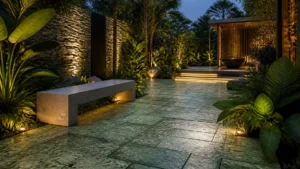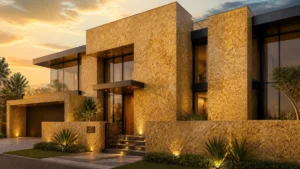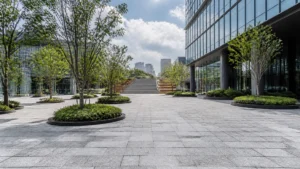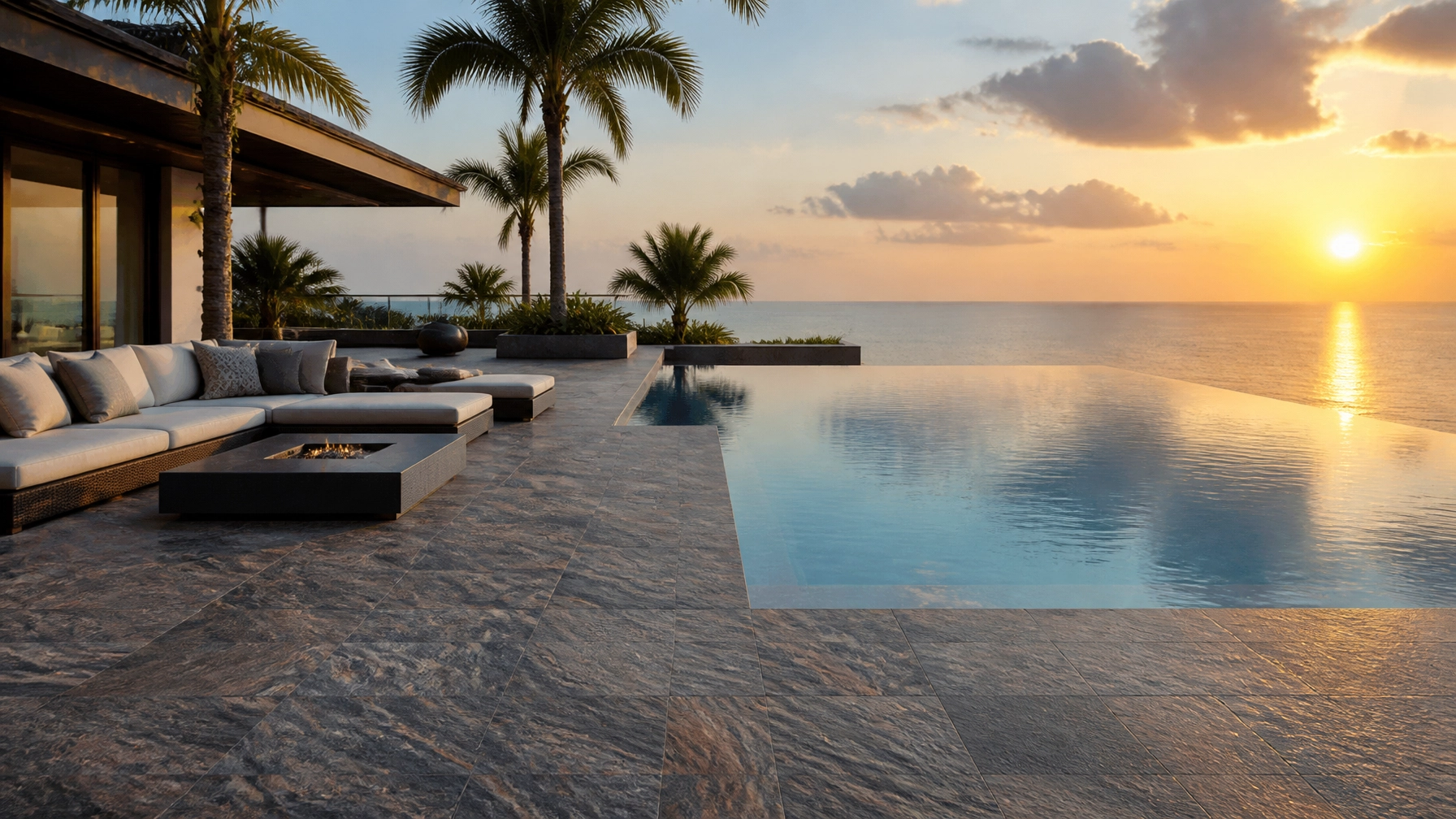
In the world of high-end architectural design, names often carry a weight of expectation. When an importer or architect hears the name Himalayan Blue Granite, they might immediately envision the cold, crisp altitudes of the world’s highest peaks. Yet, in a fascinating geological irony, this striking natural stone, quarried from the mineral-rich heart of Karnataka, South India, has become one of the most sought-after materials for luxury coastal resorts.
At Stone Harbor Exports, we have seen a significant shift in how developers specify Granite. It is no longer just about durability; it is about finding a stone that can bridge the gap between "rugged naturalism" and "coastal elegance." Himalayan Blue Granite does exactly that. With its cool blue-grey base and fiery orange-red swirls, it captures the visual essence of a sunset over the water, making it a visionary choice for hospitality projects from the Maldives to the Mediterranean.
The Visual Symphony: Fire, Ice, and Organic Waves
What makes Himalayan Blue Granite stand out in a crowded market of Slabs is its unique mineral composition. Unlike the uniform speckling of common commercial granites, this stone features a light blue-grey feldspar matrix that is frequently interrupted by dramatic, swirling waves of orange, reddish-brown, and dark grey.
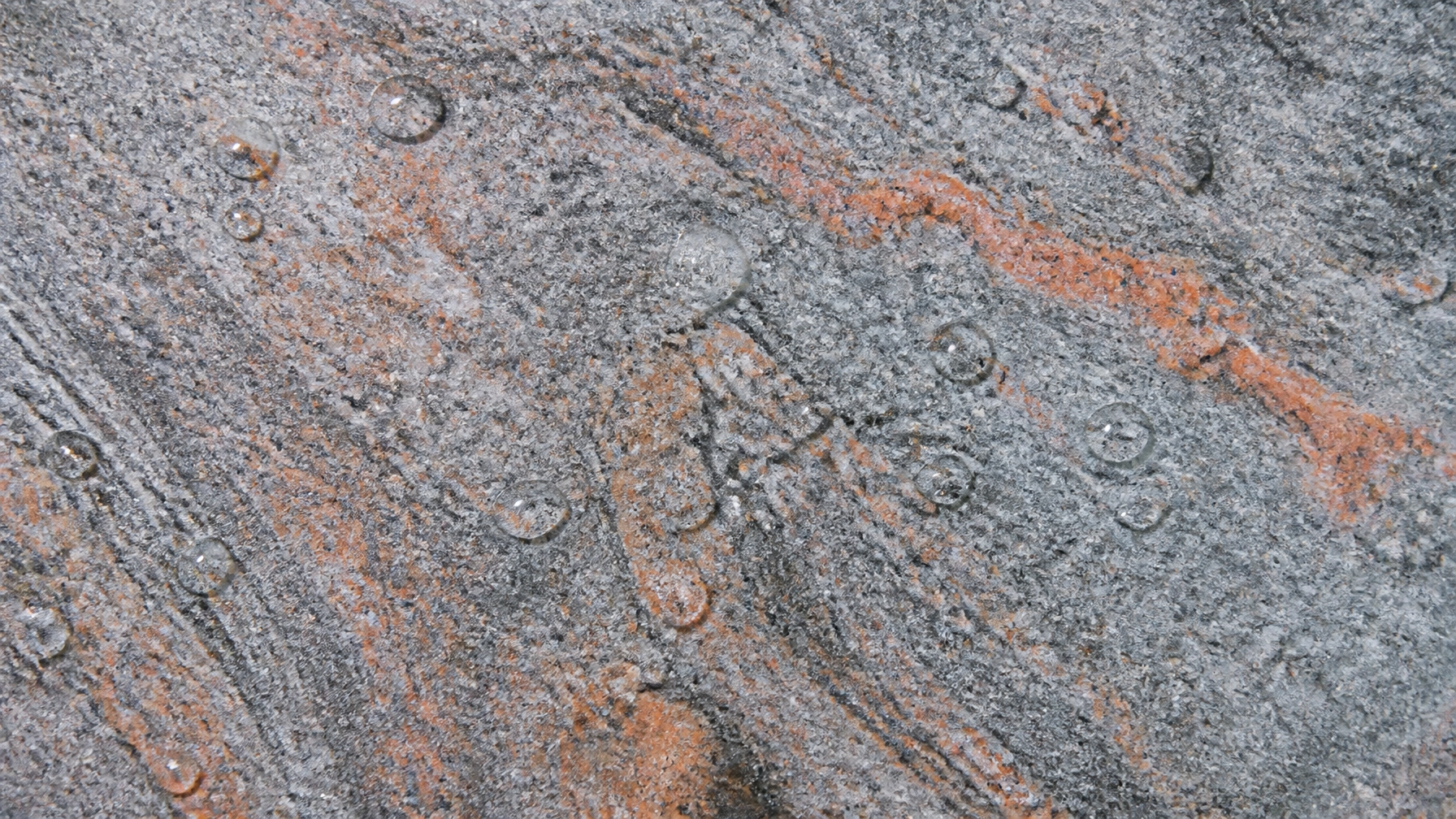
Architects often describe the pattern as "living art." Because every slab is unique, a large-scale installation, such as a resort lobby floor or an expansive terrace, becomes a non-repeating canvas. The orange mineral intrusions represent the "fire" of the earth, while the blue-grey background provides a cooling "ice" effect. For a coastal resort, these patterns mirror the organic movement of the sea and the shifting colors of the beach at dusk.
Technical Resilience: Why Coastal Developers Choose This Stone
When designing for coastal environments, aesthetics are only half the battle. The air is thick with salt, the humidity is constant, and the exposure to UV rays is intense. This is where the technical specifications of Himalayan Blue Granite truly shine.
1. Exceptional Moisture and Salt Resistance
Coastal projects are notoriously hard on natural stone. Saltwater can lead to efflorescence (unsightly white salt deposits) or even structural crumbling in porous stones. Himalayan Blue Granite boasts an incredibly low water absorption rate, typically between 0.1% and 0.4%. This high density prevents salt solutions from penetrating the stone’s surface, ensuring the material remains pristine despite years of sea spray.
2. High Hardness (Mohs 6–7)
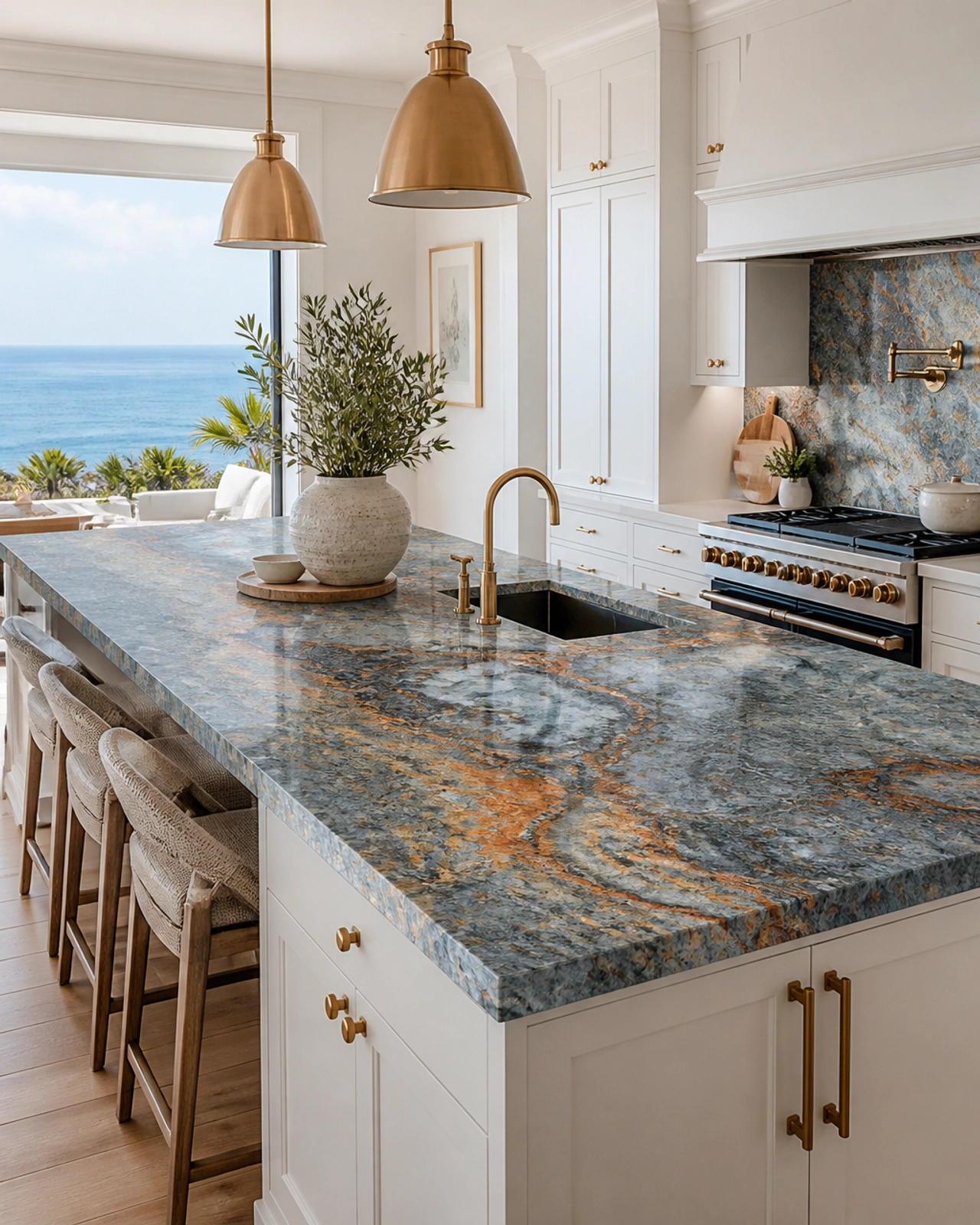
Resort environments endure heavy foot traffic, think guests walking with sandy shoes from the beach to the bar. With a hardness rating of 6–7 on the Mohs scale, this stone is practically scratch-proof. Whether it’s used for heavy-traffic walkways or as high-use Granite countertops in poolside suites, it maintains its integrity.
3. Versatile Finishes for Safety
For coastal pool surrounds, safety is paramount. A "flamed" or "bush-hammered" finish on Himalayan Blue Granite creates a slip-resistant surface that remains comfortable for bare feet. The textured finish also softens the color palette, giving it a more earthy, weathered look that blends seamlessly with sandy landscapes.
Beyond the Shore: Feature Walls and Luxury Interiors
While the exterior applications are clear, Himalayan Blue Granite is increasingly moving indoors. Visionary architects are using bookmatched Slabs to create dramatic feature walls that serve as the focal point of luxury villa living rooms or hotel reception areas.
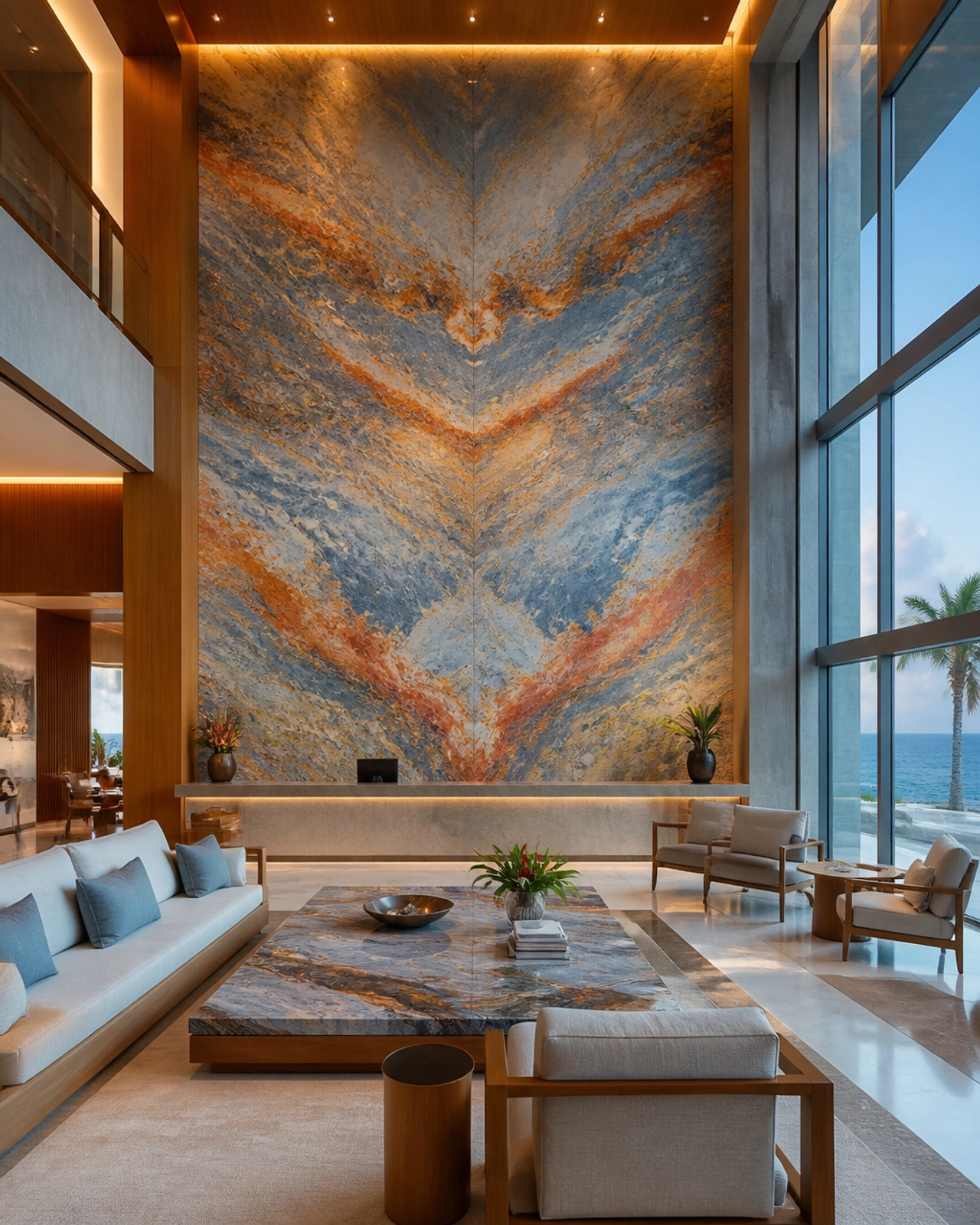
When polished, the orange and red swirls gain incredible depth, resembling high-altitude cloud formations or deep-sea currents. It offers the visual impact of an "exotic" marble but with the unmatched durability of granite. For designers who want the "wow factor" of a luxury material without the high-maintenance sealing requirements of softer stones, this is the definitive answer.
Comparing the "Pearls": Himalayan Blue vs Blue Pearl Granite
In the global export market, we are often asked to compare Himalayan Blue Granite with the legendary Blue Pearl Granite. While both are "blue" stones, they serve very different aesthetic purposes.
- Blue Pearl Granite: Originating from Norway, this stone is famous for its iridescent "labradorescence", shimmering silver and blue crystals set against a dark background. It is a stone of "shimmer."
- Himalayan Blue Granite: This is a stone of "movement." It doesn't rely on iridescence but on sweeping, organic waves of color.
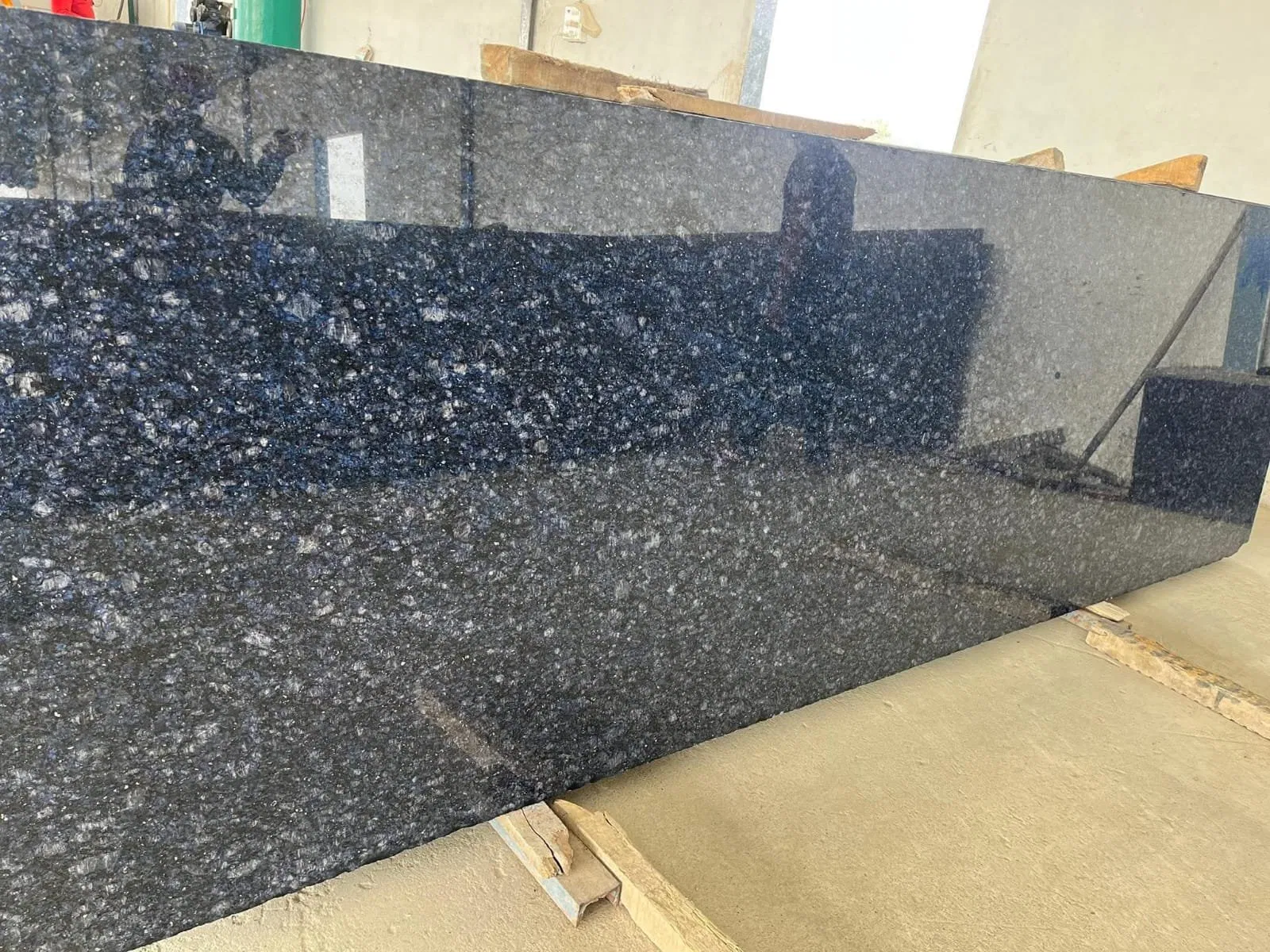
For a resort project, Blue Pearl Granite offers a more formal, jewelry-like elegance, whereas Himalayan Blue Granite feels more integrated into the natural environment. Many distributors carry both to offer their clients a choice between "meticulous shimmer" and "dramatic flow."
Sourcing Excellence: The Stone Harbor Advantage
As a global export partner, Stone Harbor Exports manages the entire journey of these stones from the quarries of Karnataka to your project site. We understand that for large-scale resort projects, consistency and logistics are just as important as the stone itself.
We work closely with local quarries to ensure that every batch of Himalayan Blue Granite meets our strict quality inspection standards. Whether you need raw blocks for large-scale fabrication or precision-cut Slabs ready for installation, our global shipping network ensures efficient delivery.
In coastal architecture, where the environment is both beautiful and brutal, Himalayan Blue Granite is more than just a surface. It is a high-performance material that brings the majesty of high-altitude aesthetics to the water’s edge, scaling the heights of luxury for the world's most prestigious resort destinations.
Frequently Asked Questions about Himalayan Blue Granite
Is Himalayan Blue Granite suitable for kitchen countertops?
Absolutely. Its high hardness (Mohs 6–7) and low porosity make it heat and stain-resistant. A leathered finish is particularly popular for modern kitchens as it reduces the visibility of fingerprints.
Does this stone require frequent sealing?
While it is naturally very dense, we recommend a high-quality breathable sealer upon installation, especially in coastal or high-use areas. Because it has low water absorption, it requires much less maintenance than marble or sandstone.
Where does Himalayan Blue Granite actually come from?
Despite the name, it is not from the Himalayan mountains. It is quarried in Karnataka, South India. The name refers to its visual resemblance to mountain clouds and cool alpine tones.
Can it be used for outdoor pool coping?
Yes, a flamed finish provides the necessary slip resistance. Its resistance to salt and moisture makes it one of the best choices for luxury pool surrounds.